
Emma Tipton, from Emma Tipton Gardening, presented her tips for wildlife gardening at our March 2026 meeting. UK gardens cover 3 x the area of nature reserves and are critical for biodiversity. The more species of plants, microorganisms, fungi and animals that we support, the healthier our environment will be and the better our physical and mental health.
What do we mean by Wildlife?
- Soil microorganisms
- Fungi
- Worms
- Insects
- Plants
- Animals (insects, spiders, woodlice, reptiles, amphibians, mammals).
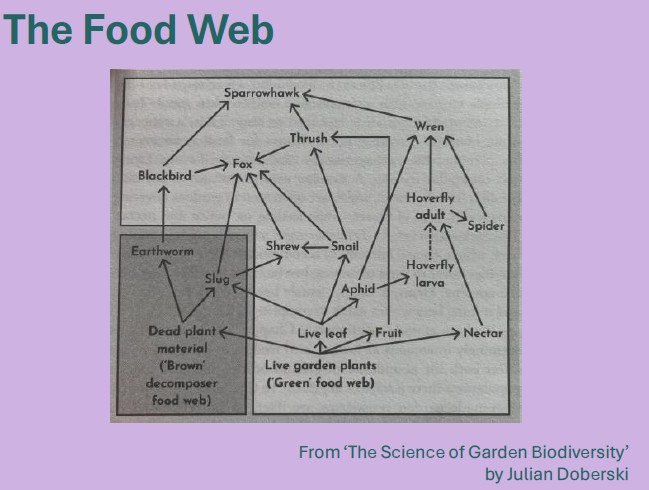
Our garden wildlife relies on interconnected food webs.
The Benefits of Nature
- Nutrient cycling.
- Beneficial insects like ladybirds help to control pests.
- Pollinators support our food production.
- Supports our physical and mental wellbeing.
- Also helps with water purification, mitigating the effects of extreme weather and helping soil formation.
Recent Research Findings and Projects
RHS State of Gardening Report 2025
“Gardens are biodiversity hotspots and climate allies, covering 4.6% of Great Britain’s land area – over three times the size of UK National Nature Reserves – and supporting over 50 million trees and thousands of species. They provide habitat for over 40% of both bird species and mammals, and more than half of butterfly, amphibian and reptile species. A single domestic garden can host thousands of species, including ones yet to be described.”
RHS Bringing Nature Home 2026 – see Also RHS Wonder Plants
“…an initiative that will highlight how plants are the foundation for all biodiversity and how our nation of gardeners is at the frontline in protecting biodiversity and fighting climate change.”
RHS Bringing Nature Home Project
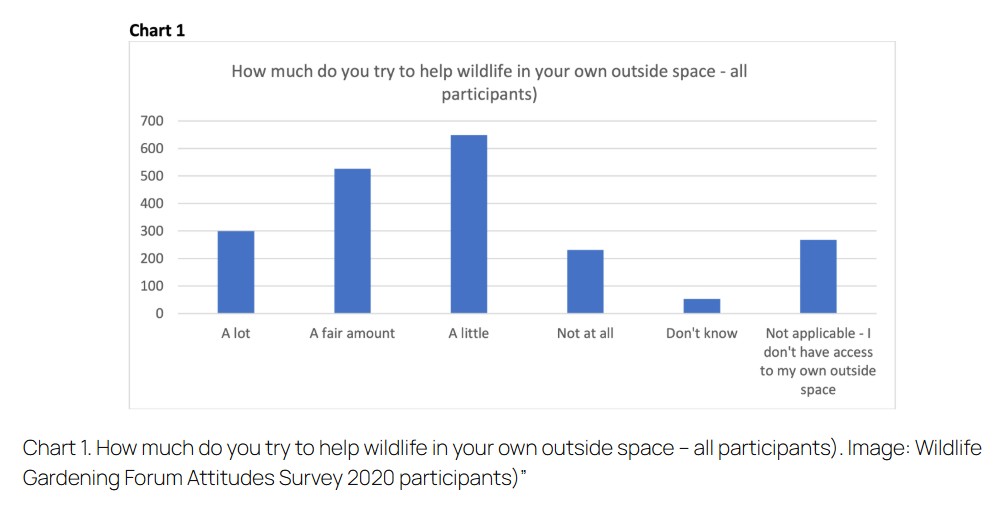
Wildlife Gardening Forum Attitudes Survey 2020
Wildlife gardening attitude survey 2020
Wildlife Friendly Ideas
1. Add Habitats and Homes
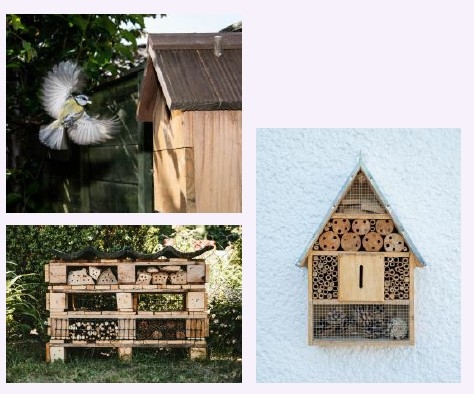
- Bird boxes
- Bat boxes
- Hedgehog homes
- Log pile, twig pile or dead hedge from prunings
- Stone piles
- Sand pile
- Areas of long grass and short grass
- Leaf litter.
The RSPB website includes lots of help and advice for building bird boxes, bat boxes, bee hotels and much more. See RSPB Advice
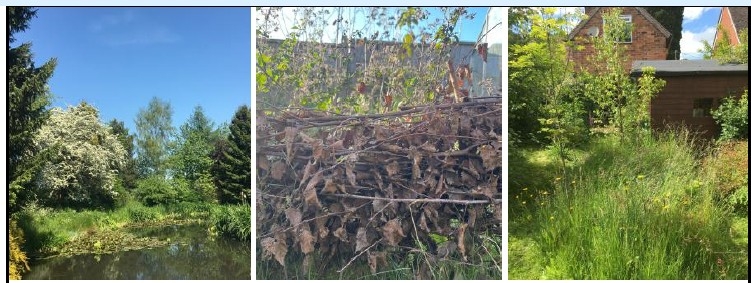
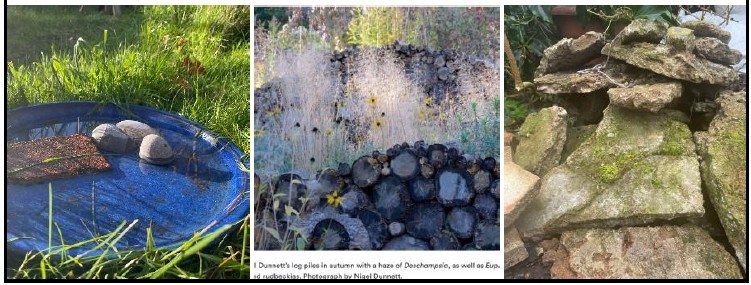
Garden Pond
Any size of garden pond (even a saucer) is better than nothing. Remember to include shallow sides and/or ways for creatures to climb out. Fill and top up your pond with rainwater. Consider the site of the pond: some sunshine is best, but try to avoid the area under trees so that the pond doesn’t bercome clogged with fallen leaves.
Include planting, log piles and stone piles around your pond to provide cover.
You may need to remove dead leaves, weeds and twigs from your pond, but anything taken out should be left at the side of the pond to allow any creatures to crawl back in.
Wildlife Gardening Forum – Pond Advice
Fresh Water Habitats – Pond advice
Wildlife Trusts – How to Build a Pond
2. Layering Plants
Aim for continuous planting, horizontally and vertically, to provide habitats for a wide variety of wildlife as well as routes they can use to move around your garden and into and out of your garden.
Ground cover – herbaceous layer – climbers – shrubs – trees

3. Minimise Disturbance
Try to leave as much as possible in the garden, particularly over winter, so as not to disturb over-wintering creatures:
- Leave cutting down herbaceous plants until spring – the stalks can provide a useful winter home for insects.
- Avoid moving logs and stones that may be protecting wildlife.
Reduce digging soil which can damage microorganisms (ideally use the No-dig method – See November 2025 Meeting Notes).
Avoid cutting hedges between March – September to protect nesting birds.
Night lighting disrupts nocturnal creatures – if you need it, try to focus the light downwards.
Avoid mirrors in the garden that confuse flying creatures.
4. Protect and Feed your Soil
- Minimise digging (or use No-dig gardening).
- Avoid artificial fertilisers or use these sparingly.
- It’s best to use your own home made garden compost – See March 2025 Meeting Notes.
- There is a symbiotic relationship with soil microbes that we want to protect.
5. Avoid Harmful Chemicals
(pesticides, insecticides, slug pellets, fungicides, herbicides)
Harmful chemicals disrupt the food web. Even if chemicals are very specific to a certain pest, removing that pest can reduce the food for it’s predators. Many of these chemicals are also harmful to beneficial insects. Best advice is to adopt integrated pest management and to keep your plants healthy so that they can be resilient to pests.
Managing Pests and Diseases Without Chemicals | RHS Advice
Integrated Pest Management
- Scouting – frequently look for issues so you can address them before they become a big problem.
- Identifying pests and diseases – see RHS website and similar.
- Monitoring the problem.
- Setting thresholds for when further action is needed.
- Cultural controls – physical action to remove pests, using barriers to protect crops from pests.
- Biological controls like nematodes and wasps.
- Chemical controls only if all else has failed.
6. Grow Food for Wildlife
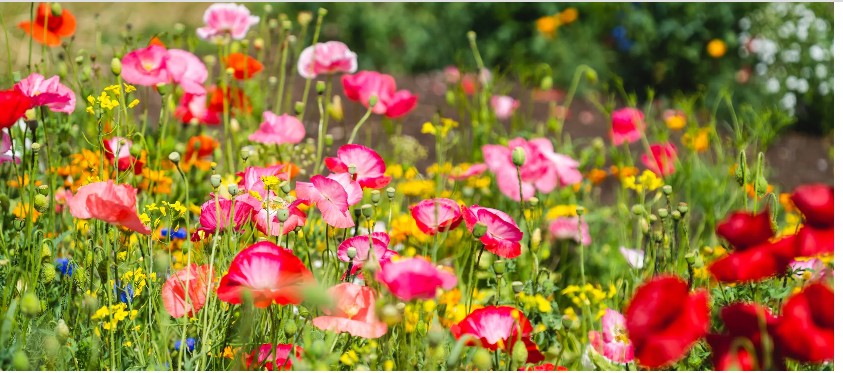
- Aim for as much variety as possible with your planting – some creatures are specific to only one or a few plants.
- A succession of flowers throughout the year will provide food for a variety of wildlife.
- Try to use a variety of flower shapes: single petals, tubular, flat-headed.
- Leave seed heads on through the winter (e.g., lavendar, buddleia).
- Nettles and native plants are much-loved by butterflies.
- Seeds, nuts and berries are all good food sources, especially for birds: hazel, holly, hawthorn, rowan.
See RHS: Plants for a wildlife Garden
RHS Bringing Nature Home Wonder Plants:


7. Connect to the Wider Environment
Link your garden to its surroundings:
- Use hedges rather than fences.
- If you have fences or walls, see if you can leave gaps for wildlife (e.g., hedgehogs and rodents) to get in and out: create a Hedgehog Street.
- Trees are a useful way of allowing creatures to climb out of your garden.
8. Enjoy!
Take time to stop and enjoy your garden and its wildlife.
