

A panel of experts convened for Question Time at Cleobury Gardeners in February. Jackie Percival from The Creative Garden, Emma Tipton from Emma Tipton Gardening and Wade Muggleton (author and contributor to Permaculture magazine) answered members’ questions on a variety of topics.
How can I Treat Rose Black Spot Without Spraying?

“Once one of the roses in my garden gets black spot, it seems to spread rapidly to all the others. The affected leavedes are unsightly. I don’t want to spray them if I can avoid it.”
Answer
Rose black spot is a fungal disease where purple or black spots develop on the leaves, which often drop early. As well as looking unsightly, if a lot of leaves are lost, the plant becomes much less vigorous. The disease spreads easily on the wind and can infect many roses in a garden / area in a short time.
You will have to live with this to some extent, but there are some things you can try to reduce the problem:
- Keep roses bushes well ventilated by pruning to a goblet shape and by not planting too close
- Remove all fallen leaves, prunings and affected leaves that remain on the plant in winter. These should not be composted – put in your green bin or dispose of at your local recycling centre
- Remove the top inch of soil around the plants during winter / spring pruning and dispose of it – replace with fresh soil
- Mulching around the plant in early spring can also help to suppress fungal spores and helps retain moisture
- Keep the plants as healthy as possible by feeding correctly and mulching to retain water
- Choose a variety that is less susceptible to black spot, but find a new planting spot – don’t plant where a rose has been grown previously
- Companion planting can be used to fill gaps between roses and reduce aphids (thereby also helping to keep your roses healthy). Salvias are a good choice to help with black spot
Sprays are available that can delay the disease if started early. The RHS does not recommend using fungisides, but information is available on their website: RHS fungicides for home gardeners.
Can I Move Perennials Even if it’s Not the Right Time?
“I need to move some bearded irises soon and can’t wait until the traditional summer time to dig them up. Will they survive if I dig them up now?”
Answer
You can move / divide and replant perennials at almost any time of year, including irises. Most perennials have a “best” time to move or divide them – usually after flowering, but they can be successfully moved anytime. The most important things are to pot up or replant the divisions as soon as possible (don’t let them dry out) and keep the newly potted or planted perennials well-watered. Reducing foliage will help prevent moisture loss.
Why Did My 4 Year Old Pear Tree Produce No Blossom Last Year?
Answer
Most fruit trees did very well last year. It would be best to wait to see if the tree produces blossom this year before doing anything like pruning. If there is no blossom again, try pruning in summer.
Although advice is generally to prune apples and pears when they are dormant (late winter/early spring), this “tradition” arose mainly because labour was plentiful at that time. Winter pruning is also useful for large apple and pear trees because it’s easier to achieve a good shape.
Summer pruning shocks apples and pears and encourages flowering the following year. Prune new season growth back by 2/3 to an outward-facing bud.
Stone fruit (plums, cherries etc) should be pruned May – September (usually just after fruiting) to avoid silver leaf disease.
What is the Best Way to Deter Wild Pigeons from Damaging Young Vegetable Plants and from Damaging the Bird Feeder?
Answer
The only certain way to protect young plants is to grow them under netting.
Bird feeders can be concreted in to prevent them being damage when pigeons land on them and rock them.
There are some deterrents, you could try but these are likely to be less effective:
- Hang shiny objects like old CDs on strings over the young plants (charity shops sell CDs cheaply)
- It’s possible to buy fake birds of prey to position near your young vegetable plants
- Invest in a cat?
RSPCA Guidance on Pigeons in the Garden
What is the Best Way to Treat Woolly Aphid on Brussel Sprouts?
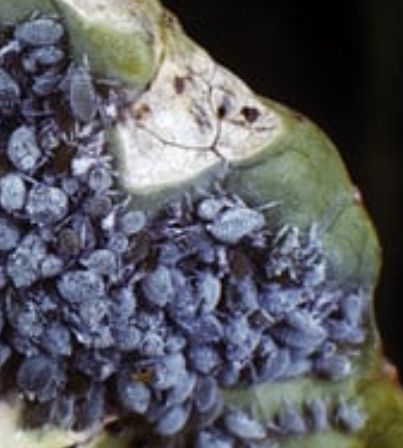
“After being so careful growing my sprout lants and protecting them from the butterflies with netting, I found they became infested with grey-looking bugs on the top leaveds. My usual method of soapy water spraying didn’t work. What should I have done?”
Answer
Mealy cabbage aphid infests brassica plants forming clusters of grey/white aphids on growing tips or under leaves.
Try putting some vinegar (1 part vinegar to 3 parts water) in the spray instead of soap. This may help breakdown the aphids waxy coating.
It’s also important to monitor plants closely so that you can take action before the problem gets severe and damages the plant.
Sappy growth attracts aphids so don’t over-fertilise young plants.
Make sure there is enough ventilation around the plants by planting at correct spacing.
Are There Cauliflower Varieties that are More Reliable for Forming Tight Heads?
“My cauliflowers tend to produce looser heads than I’d like. I have grown Romansco in the past because their taste isn’t affected too much if the heads are loose.”
Answer
General tips for avoiding loose heads include:
- Don’t over-feed
- They like hard, thick soil – clay is ideal
- Try choosing shorter varieties
- Even watering is important throughout.
Why didn’t My Sweet Potatoes Produce a Crop?
“I bought some sweet potato slips on-line and planted them in the garden, but got no edible crop from them – what was I doing wrong?
Answer
Sweet potatoes won’t grow successfully outside in Shropshire. As a minimum you will need a greenhouse, lots of fertile soil (e.g., from horse manure) and lots of watering.
Overall, it’s likely to be more trouble than it’s worth (and very expensive by the time you’ve bought the greenhouse and the horse!)
Do I Really Need to Scrape My Wild Flower Meadow?
“I’m concerned I may be scraping too hard: some wild flowers are not coming back. Note that there is some grass still growing through.”
Answer
Wild flower areas are really difficult to achieve in a typical garden because soil fertility will be too high. They may do well for a year or 2 but then start to decline as grass and docks crowd them out.
Scalping in late summer / autumn (once seeds have set and fallen) allows light in and keeps grass and larger weeds down. Make sure you rake up any grass. It may need a second cut in November if it’s sprouted. Try leaving an area without cutting to provide a habitat for insects and wildlife. Good luck!
Is Scrulch any Good as a Mulch?
Answer
Scrulch is shredded straw.
Expert experience is of good results in deterring slugs and snails and that it lasts about 2 years as a mulch before it needs topping up. It is more expensive compared with some other mulches, so you may want to save it for your veg beds rather than using throughout the garden – see below for other sourceds of mulch.
Scrulch is available from various on-line distributors – see the stockists list on the Scrulch website.
Any Advice on Designing a Small, North-Facing Garden from Scratch, Preferably with a Cottage Garden Theme?
Answer
Think about the basics first:
- If the bottom of the garden gets some sunshine, this is where you’ll want to sit out
- Use curving paths to get to the bottom of the garden
- Plant larger shrubs/small trees at the bends of the path curves to obscure each section of the garden from the one before it
Once you have the basic structure set down, use the RHS Plant Finder to identify plants that will be suitable for your site: RHS Plant Finder
Most of the large on-line garden centres have similar features that will let you search for pants for shady sites.
Why isn’t my Tree Peony Flowering?
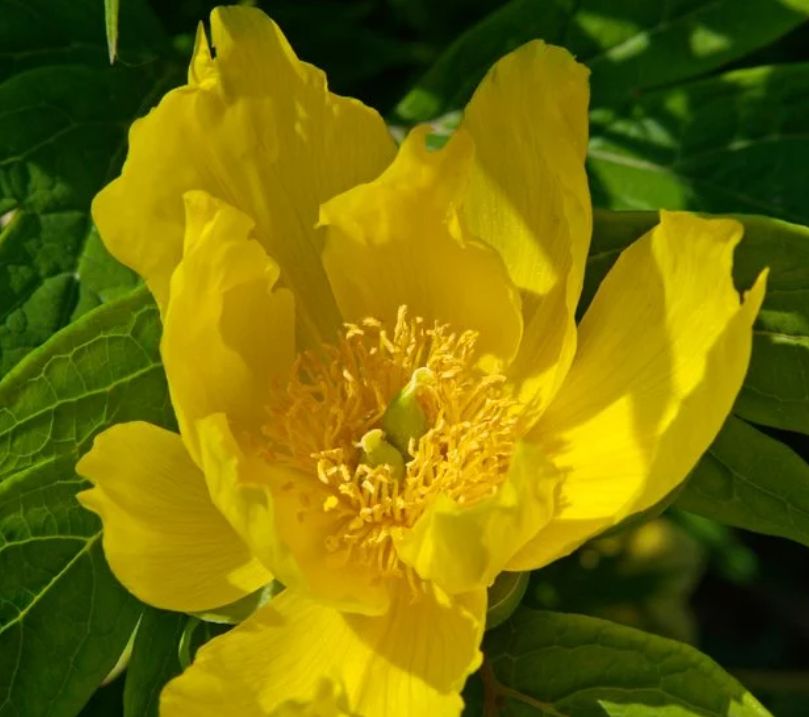
“My yellow tree Peony is 4 – 5 years old and sited near the oil tank where it does get some sun and some shade. It hasn’t been pruned or fed. It loses it’s leaves in winter and has never flowered.”
Answer
It may just need feeding: give it a good dose of manure!
It also may be better moved a bit further from the tank to give the roots space to grow.
What Can we do to Help our Gardens Cope with Climate Change?
“The plants in my garden seem to be confused – some are arriving early or out of season (e.g., the quince tree), while some like the Tete a Tete are late.
Answer
The climate is less predictable at the moment; we’ve seen some very wet summers, some hot and dry summers and are now experiencing a very wet spring.
The best advice is to apply feed and mulch now – mulching will help keep moisture in the soil if the summer is hot and dry and supresses weeds.
Mulches to consider:
- Soil improver from Worcestershire Recycling Centres: Worcestershire County Council Green Grow
- Home produced leak mould (takes 1 – 2 years to produce)
- Farlow Farm do deliveries: Farlow Farm Nursery
- See Scrulch above (although this would likely be expensive for a large area)
We may have to accept that there are some plants we won’t be able to grow anymore (and some that we can start to grow that we never could before!).
In general, starting with smaller plants is better than trying to get a much more mature plant to establish. Once the plant has settled in and is growing well, try to reduce watering over time to acclimatise it to drier conditions.
If you are growing vegetables, try to grow as many different types and varieties as you can – in any one year some will do better than others, but at least you will have something to eat! Avoid monocultures and bare soil.