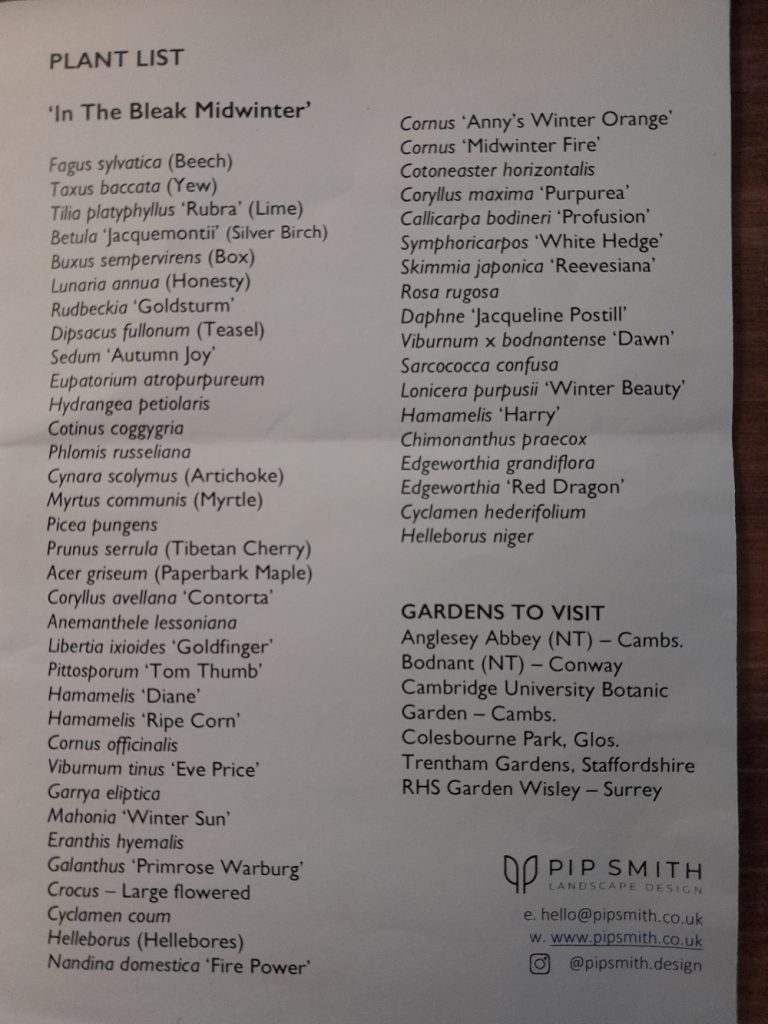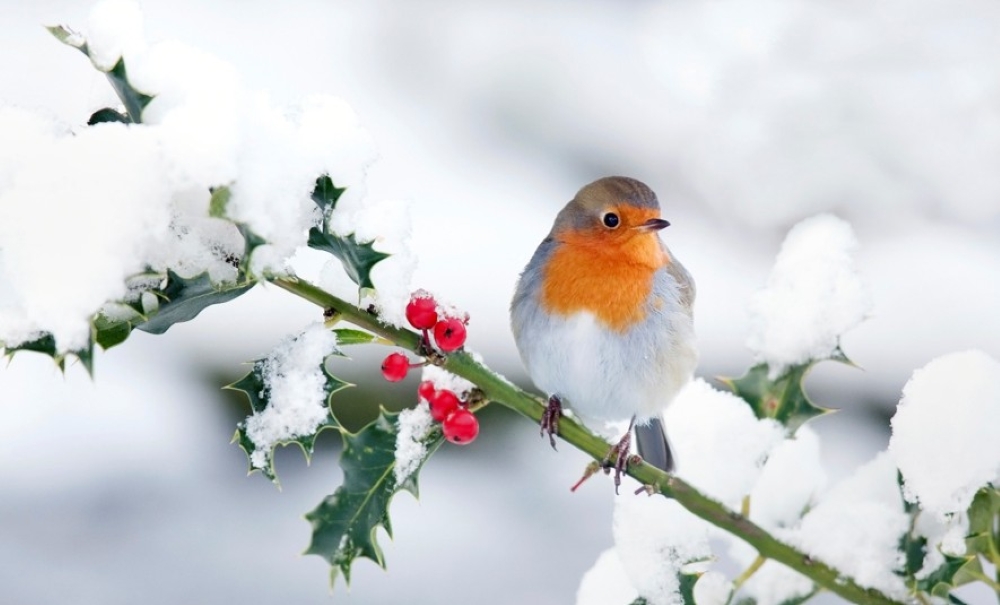
Pip Smith came to Cleobury Gardeners in November to talk about beautiful and interesting winter gardens. Pip is a garden designer and former head gardener at Wollerton Old Hall.
Winter Jobs
- Planting winter containers,
- Rose and Wisteria pruning,
- Hedge planting,
- Tree planting, including cost effective bare root types,
- Final perennial cutback (although you could leave interesting seedheads for the winter garden or for wildlife),
- Feeding borders,
- Mulching,
- Cleaning paths and patios,
- Cleaning tools.
Most importantly winter is a good time to design your winter garden and produce a list of jobs and plants you will need. Gardens need to work harder in winter to be interesting. The weather can be challenging with very wet conditions or heavy snow, but frost and snow can also be magical.
Structure
Structure in a garden is important throughout the year, including in winter. When we think about structure we are thinking mainly of the green stuff: evergreen hedging. Beech and Hornbeam are also useful for hedging: they will retain their brown leaves into late winter.
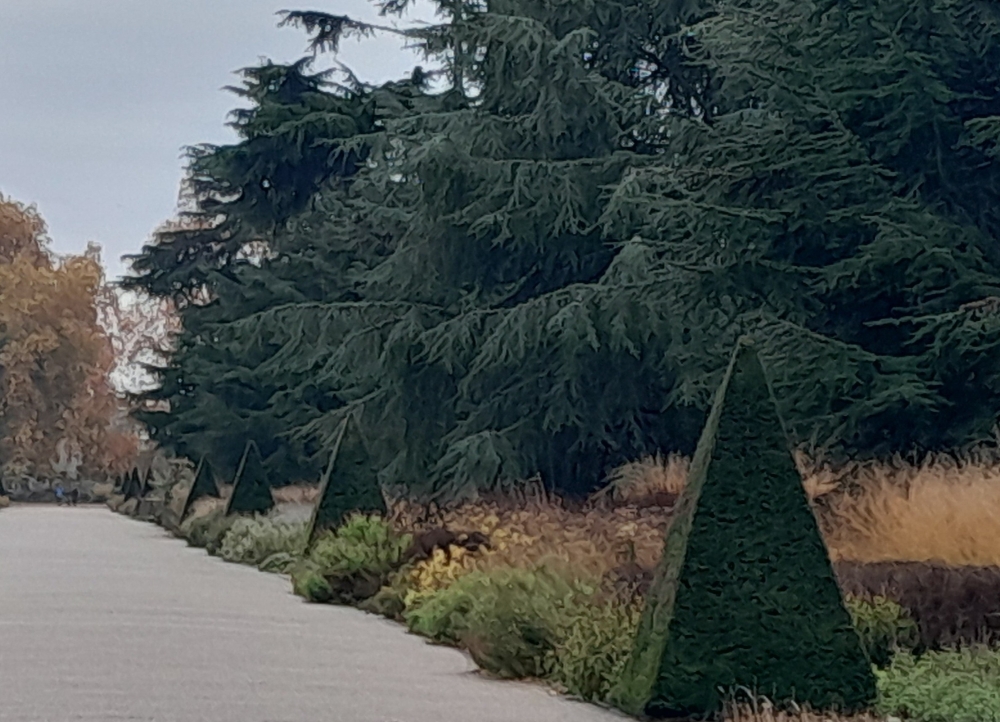
Hedging plants can be topiarised to provide both structure and interest. Repeating the same planting gives cohesion to the space so use 2 or a maximum of 3 different hedging plants (e.g., yew and beech).
Trees and shrubs with interesting shapes can be used to provide interest and structure and sometimes colour and texture too:
- Pleached limes have knobbly branches that can be seen when the leaves have fallen.
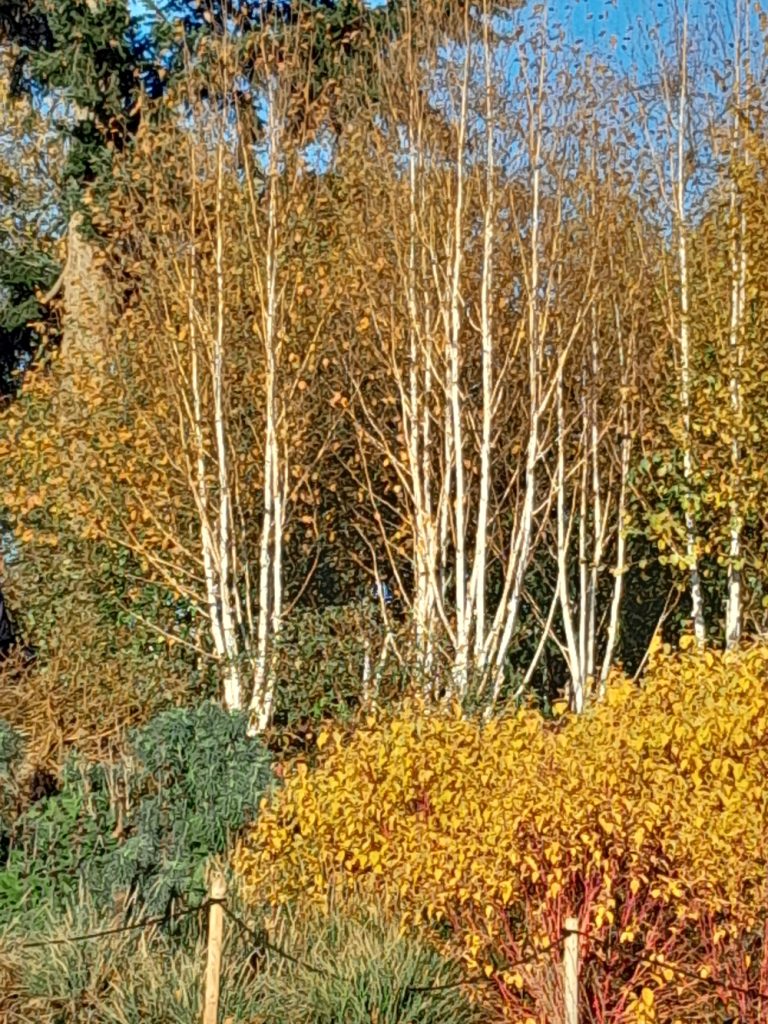
- Silver birch stems provide striking colour as well as structure and can be used as specimen trees (e.g., multi-stemmed) or close planted as a copse.
- Large shrubs can be pruned into interesting shapes and/ or have lower branches removed.
- Some trees and shrubs have intrinsically interesting forms (e.g., Coryllus avellana ‘Contorta’).
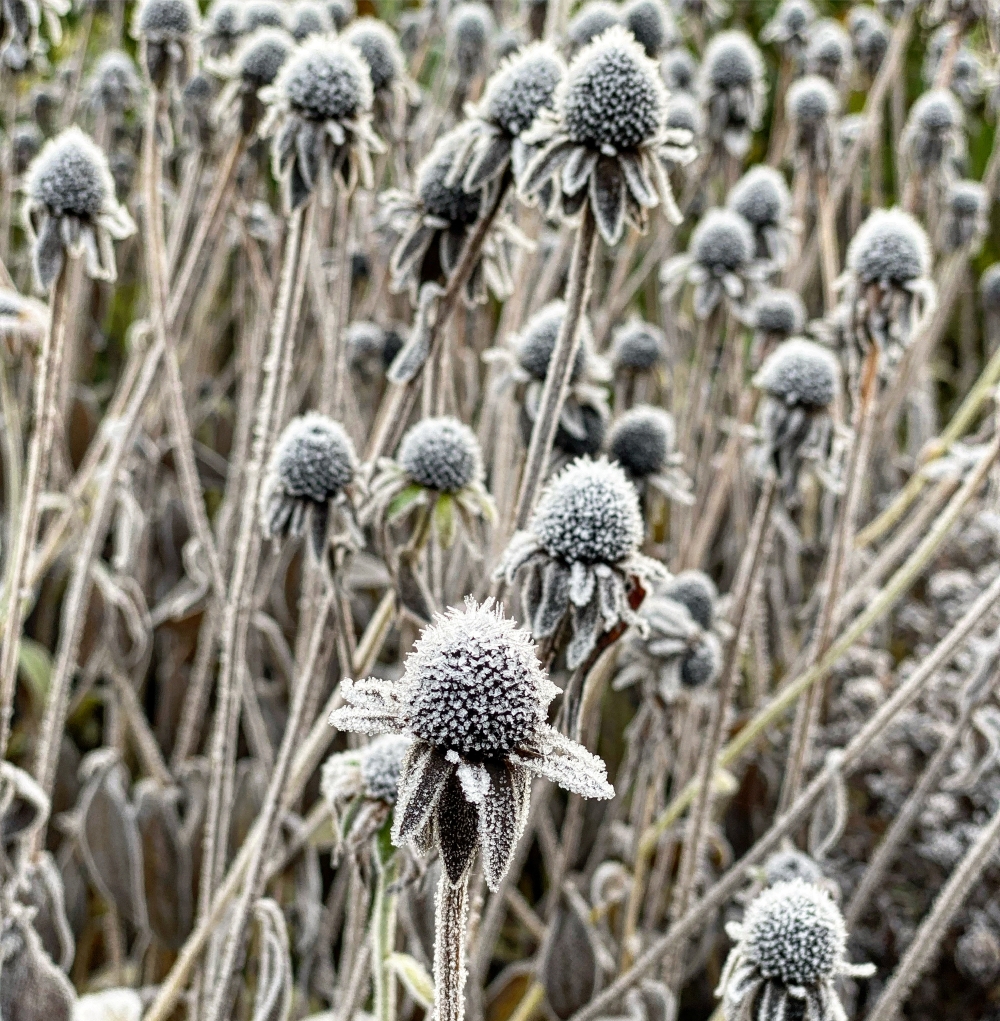
Perennials with stout stems and interesting seed heads can be left to provide contrast and structure as long as they aren’t prolific self-seeders:
- Lunaria (Honesty),
- Rudbeckia (Coneflower),
- Dipsacus (Teasel),
- Phlomis (Turkish Sage),
- Eupatorium (Hemp Agrimony),
- Sedum (Stonecrop), although this will eventually rot down in wet weather,
- Hydrangea (seed heads also protect young shoots).

Layers and Features
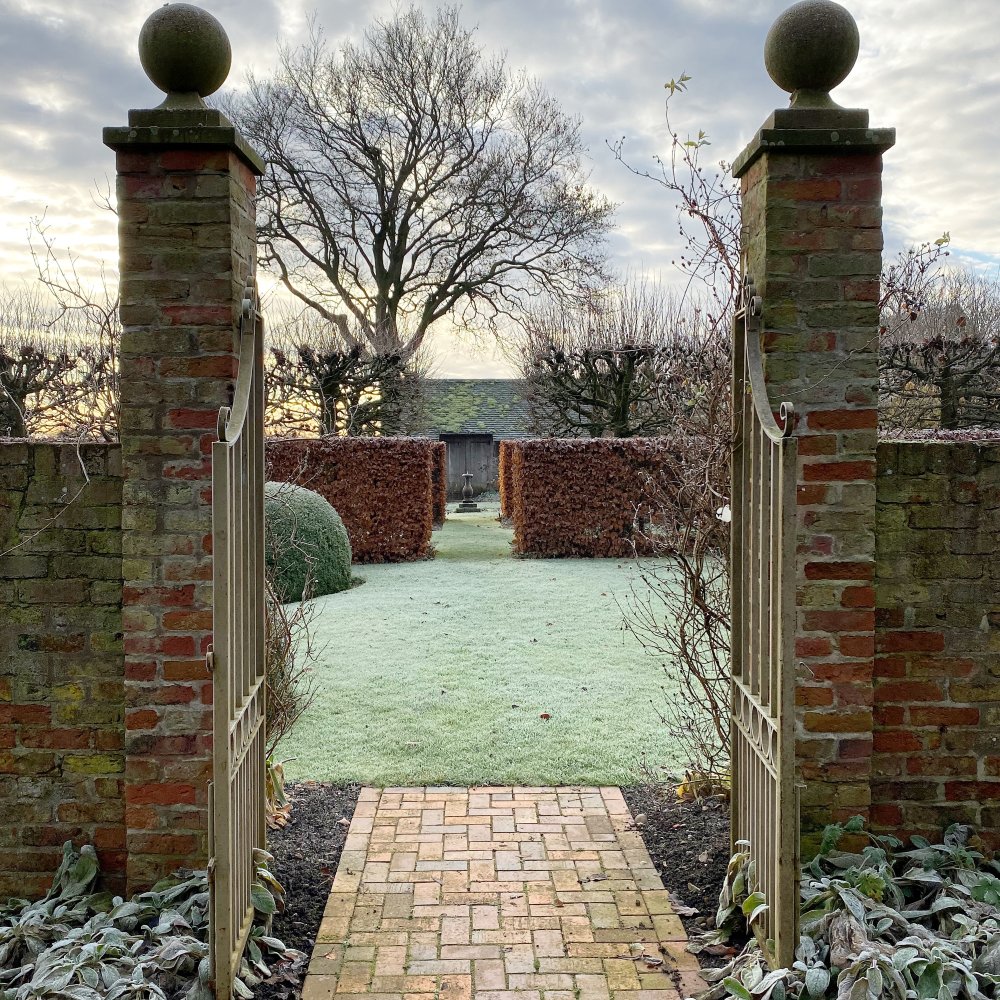
Think of your garden like a theatre and introduce structure in layers:
- Views can be framed by an interesting gate, hedge or topiary.
- Gaps in hedging lead the eye to what is beyond.
- Once you look beyond the foreground, try to introduce further layers and features in the mid- and background.
- Include interesting features in your garden that will draw your eye: a sculpture, a sundial, a bench.
- Using aged pots and features helps to age the space.
- Create a display table with pots of winter bulbs and Hellebores.
- Group together a collection of pots with different colours and textures of evergreens.
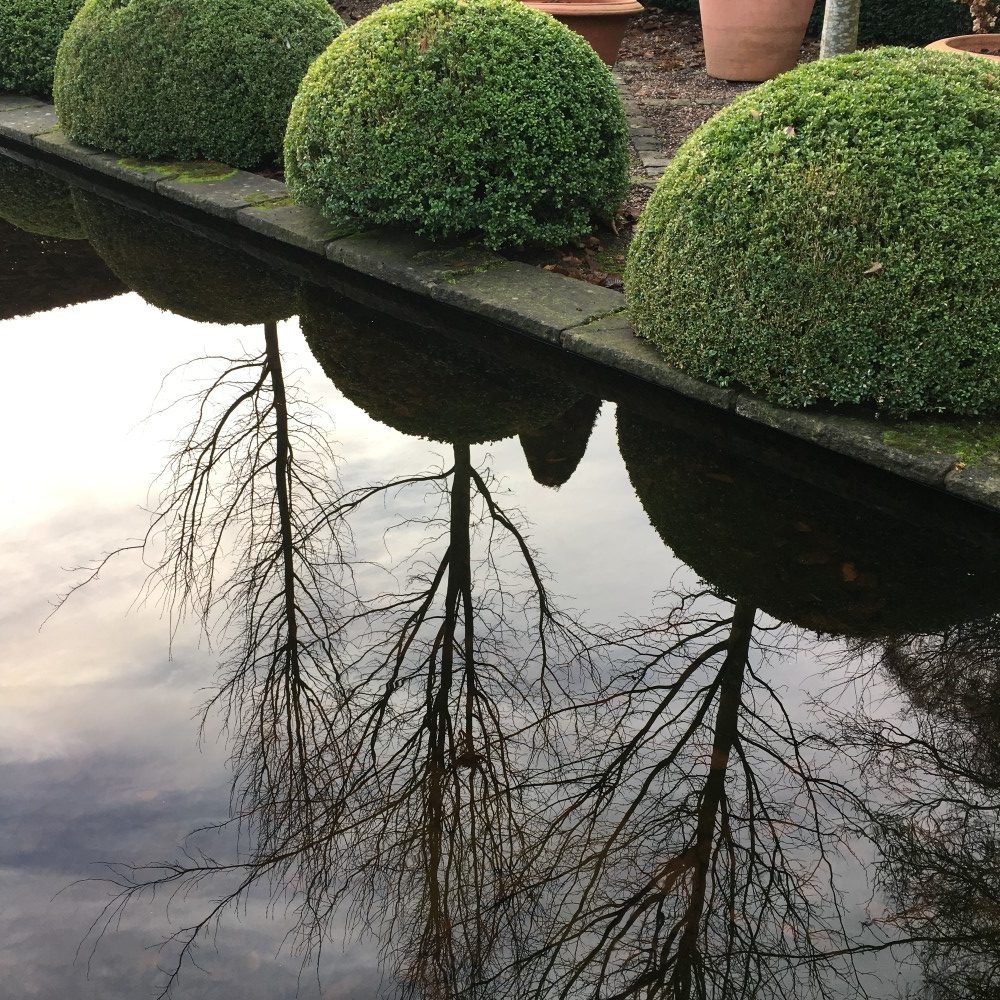
- Flat bodies of water reflect planting, light and the sky.
Frost and Snow
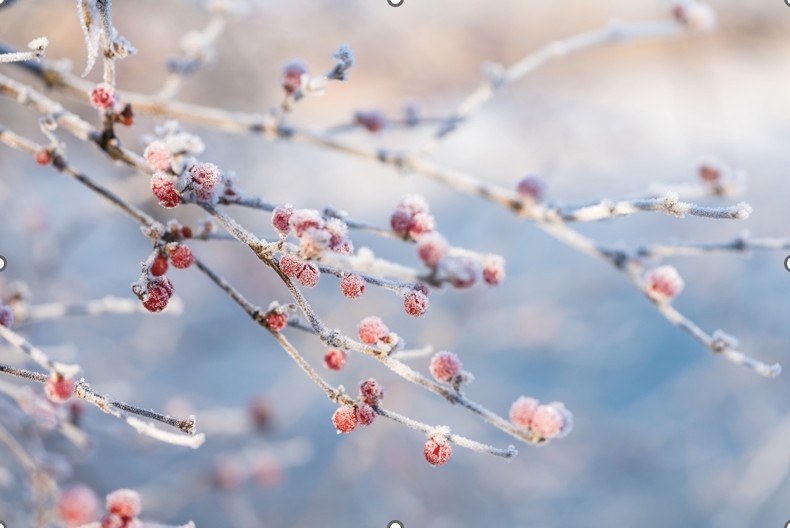
Frost and light snow can add magic to a winter garden. Some plants look at their best when covered with frost. Even heavy snow provides a different point of interest: go and look for hoofprints or pawprints of animals you may not even realise are inhabiting your garden (but keep off frozen lawns to avoid damaging the grass).

Light
Winter sun is lower in the sky, softer and more ‘golden’. By knowing how the winter sun travels around your garden you can make the most of it by ensuring there is something interesting for it to fall on or to silhouette.
Use illumination in the garden to navigate around paths and to highlight a feature but minimise the use of uplighters.
Texture
Use a variety of textures of bark, stems and perennials to provide contrast and interest.
Several species of trees have interesting bark:
- Prunus serrula (Tibetan Cherry) has polished, mahogany-coloured / coppery bark.
- Acer griseum (Paper Bark Maple) has peeling brown bark (as well as good autumn colour).
- Betula (Silver birch) has white stems (clean the stems in autumn with a brush and remove any lower branches to show off the white stems).
- Myrtus communis bark flakes and peels as the plant matures.
RHS: Trees and Shrubs for Bark
Try to combine evergreens with different textures into an interesting display. Contrasting evergreen foliage with grasses and perennial seed heads is another way to add interest to the winter garden.
Colour
Winter colour can be more intense than earlier in the year but harder to find.
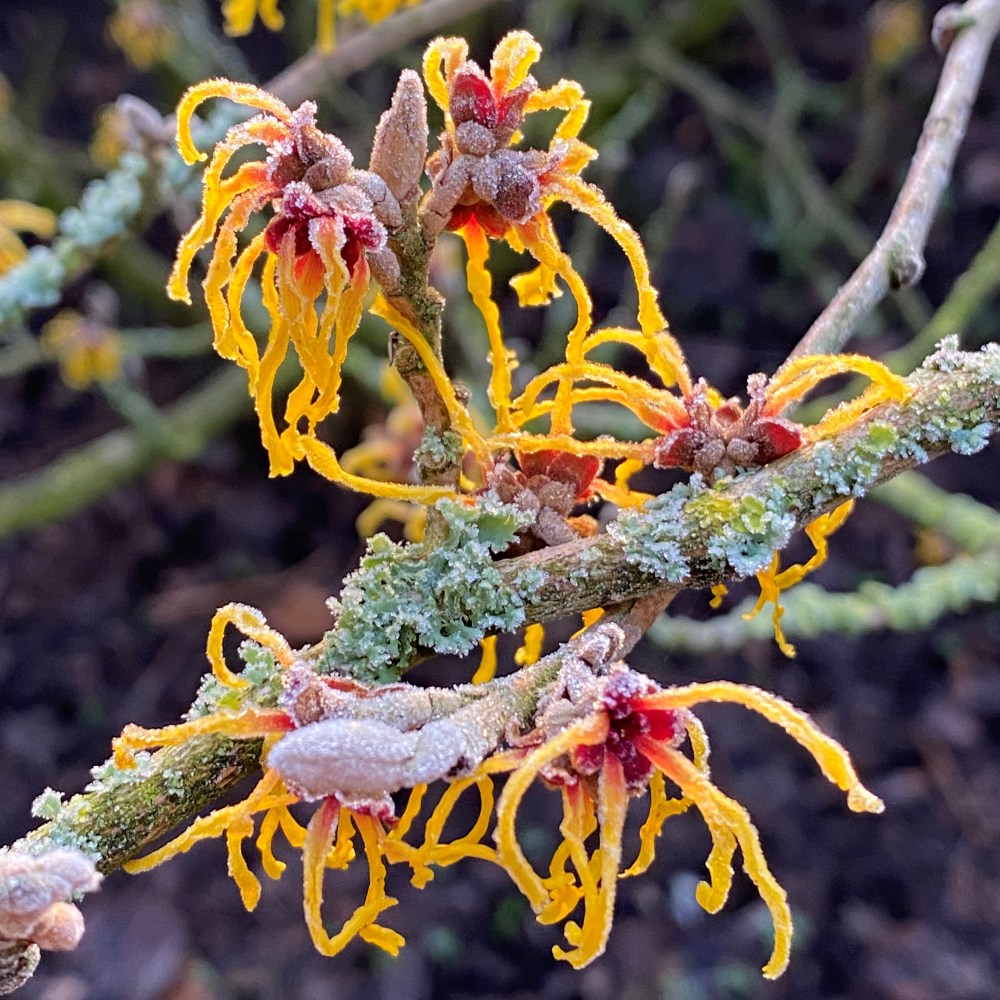
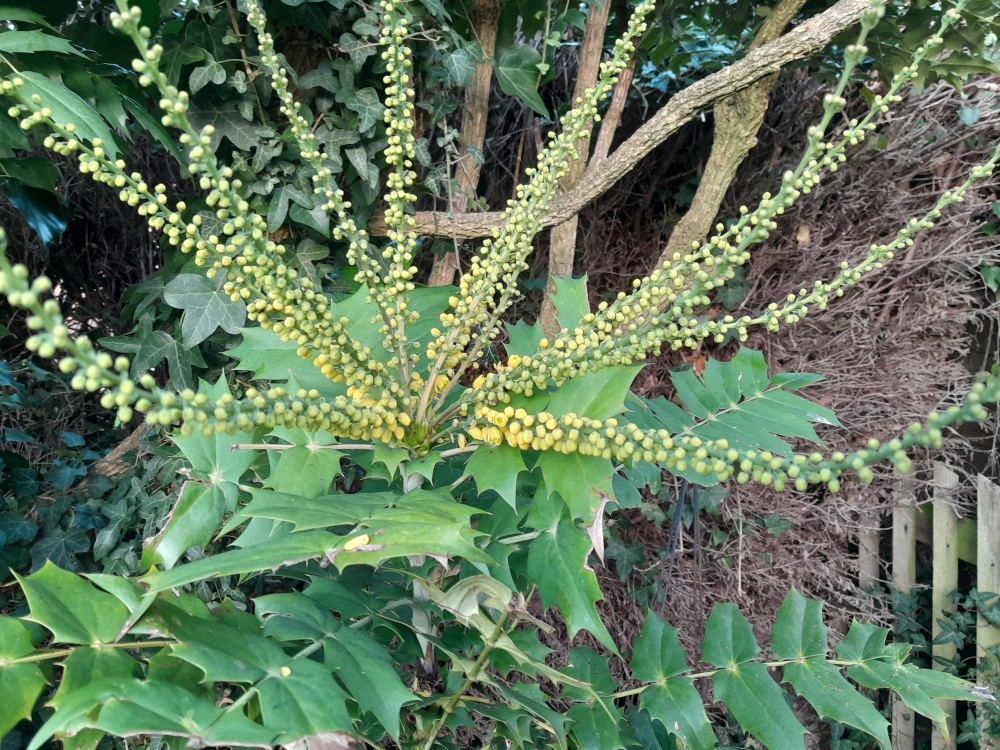
There are a limited number of winter-flowering shrubs such as:
- Hamamelis (Witchhazel): plant in full sun to get the best flower colour and scent.
- Mahonia ‘Winter Sun’ also produces scent and is useful for birds.
- Viburnum x bodnantense ‘Dawn’ is a deciduous shrub with scented winter flowers.
- Viburnum tinus ‘Eve Price is an evergreen variety: both viburnums produce white / pink flowers.
- Garrya eliptica (Silk Tassel Bush) is an evergreen that produces silvery catkins over winter.
- Cornus officinalis has good autumn colour, interesting bark and it flowers in late winter.
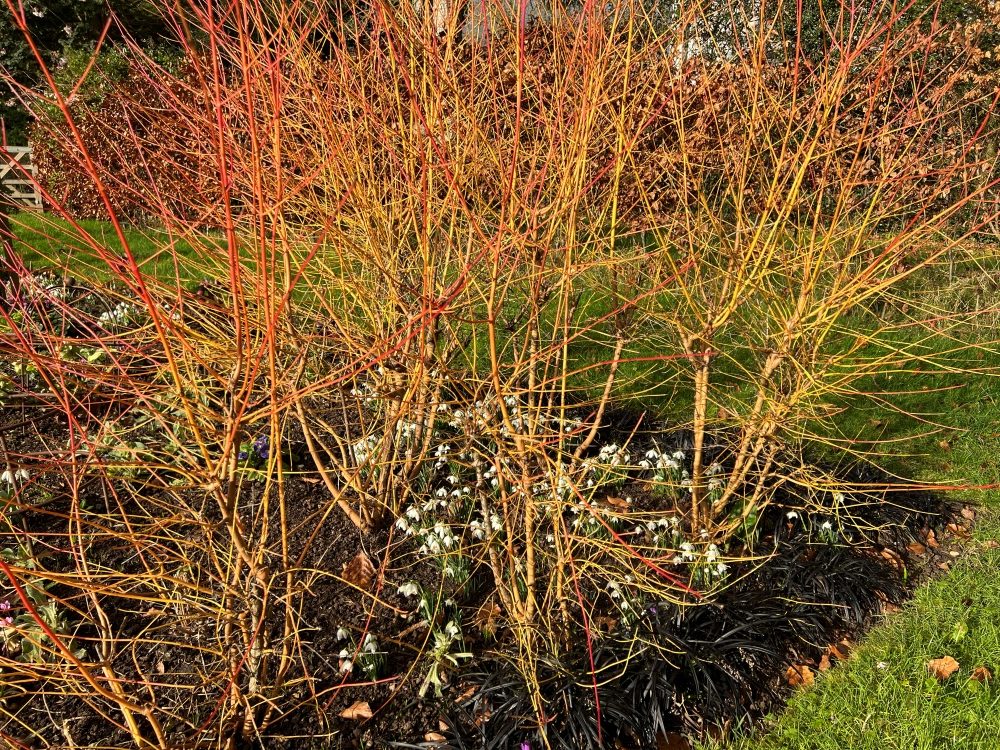
Another mainstay for winter colour are the dogwoods with their vibrant, coloured stems. Dogwoods need to be cut back quite hard in early to mid-spring to produce the most colourful stems. Cutting back every year or every other year is typical, but don’t cut lower than 1 foot above ground to avoid suckering:
- Cornus ‘Midwinter Fire’,
- Cornus ‘Anny’s Winter Orange’.
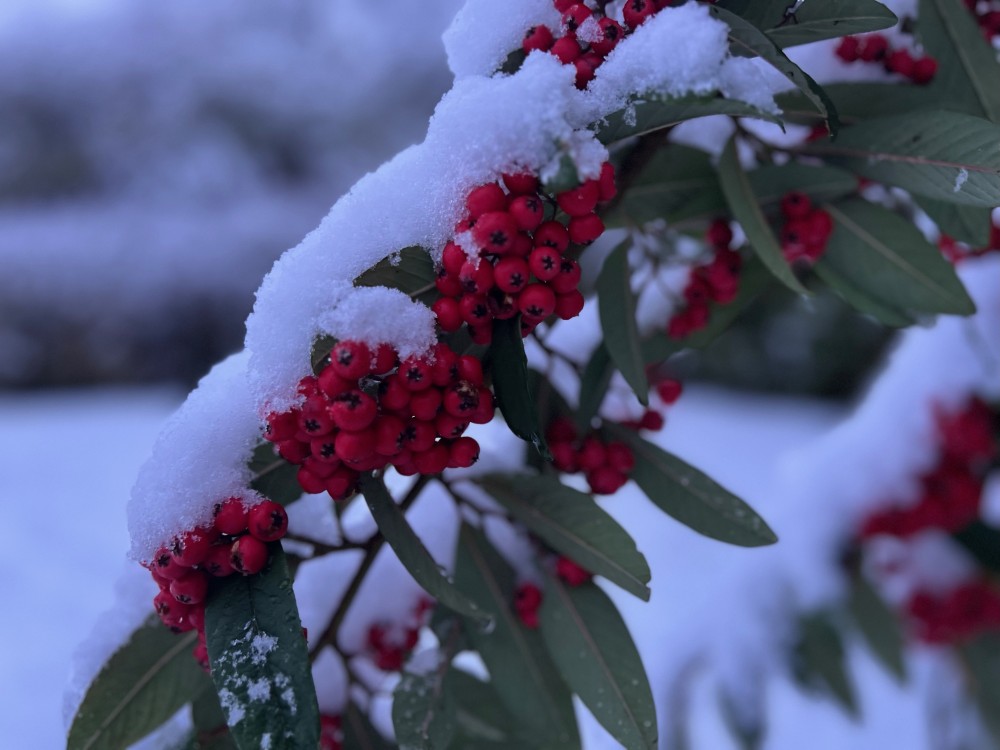
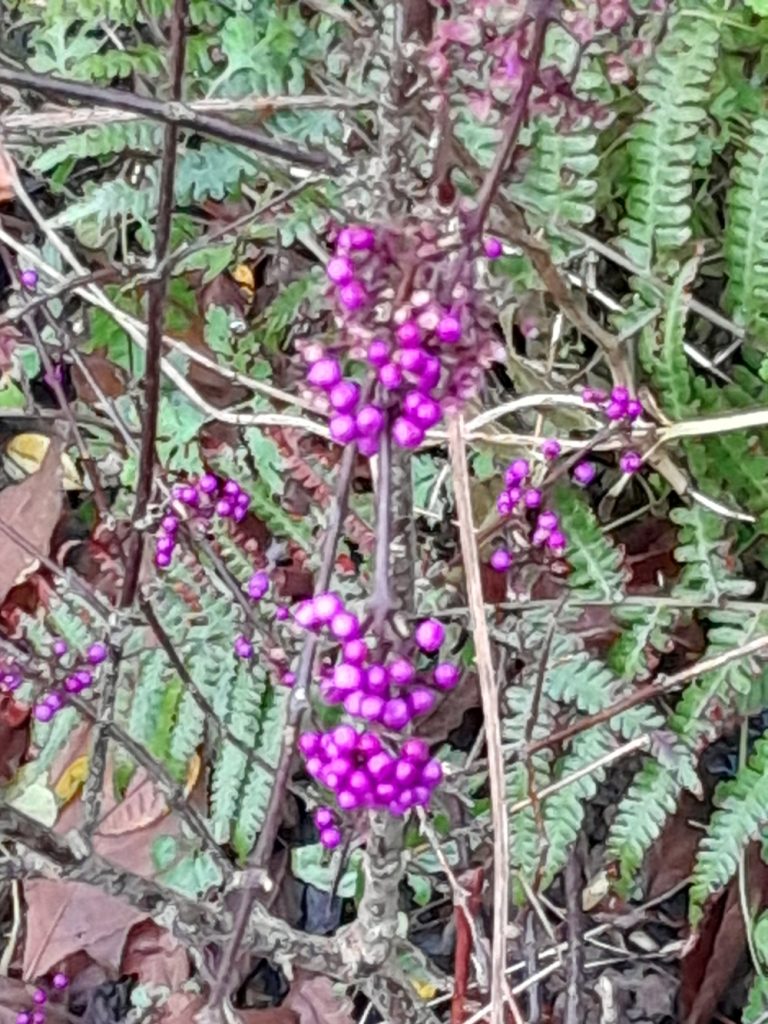
Berries provide interesting colour even when there are no flowers around:
- Cotoneaster horizontalis for masses of red berries.
- Callicarpa bodineri ‘Profusion’ (Beauty Berry) produces metallic purple berries.
- Symphoricarpus (Snowberry) is often grown as a deciduous hedge and produces white or pink berries.
- Skimmia Japonica is a tough evergreen with fragrant flowers followed by red berries.
- Myrtus communis (Myrtle) is a useful evergreen with blue/black berries. Avoid growing this in exposed or wet areas.
- Rosa rugosa produces welcome rose hips [Note: Rosa Rugos is classified as a non-native invasive species and you should not plant this in the wild or cause it to grow in the wild, so this one best avoided!].
Evergreens come in a variety of shades and textures of green that can be combined to create an interesting display. There are some coloured-leaved evergreens also worth considering to add interest to the winter garden:
- Nandina domestica ‘Fire Power’ (Heavenly Bamboo) has good colour throughout the year changing to deep reds and purples in winter.
- Pittosporum ‘Tom Thumb’ is another evergreen that changes colour throughout the year and has glossy dark purple leaves in winter.
Winter flowering perennials, bulbs and corms are typically low growing and very welcome for underplanting shrubs and trees:
- Snowdrops,
- Crocus,
- Cyclamen
- Early daffodils,
- Eranthis hyemalis (Winter Aconite) produces yellow flowers in late winter.
- Helleborus come in a range of colours but will hybridise over time if you have planted more than 1 variety. Twelve Nuns Nursery specialises in Hellebores specialises in Hellebores.
Scent
The following are suggestions for planting near entryways or pathways to enjoy the scent. Some are also useful in winter for their flowers or leaves:
- Daphne ‘Jacqueline Postill’,
- Viburnum x bodnantense ‘Dawn’,
- Sarcococca (Christmas Box),
- Lonicera purpusii ‘Winter Beaty’ (Winter Honeysuckle) is a rounded shrub producing creamy white, highly scented flowers,
- Hamamelis (Witchhazel),
- Chimonanthus praecox (Winter Sweet) can take many years to flower. Try to avoid pruning it while it’s young and plant in a sheltered spot.
- Edgeworthia grandiflora produces exotic-looking yellow flowers that are heavily scented. The variety ‘Red Dragon’ has red flowers.
Winter Gardens to Visit
Trentham Gardens Staffordshire
Coloesbourne Park Gloucestershire – especially for the snowdrops
Anglesey Abbey, Cambridgeshire
Cambridge University Botanic Garden
Useful Links
RHS Plants for Winter Interest
RHS Plants for Winter Wildlife
Plant List