
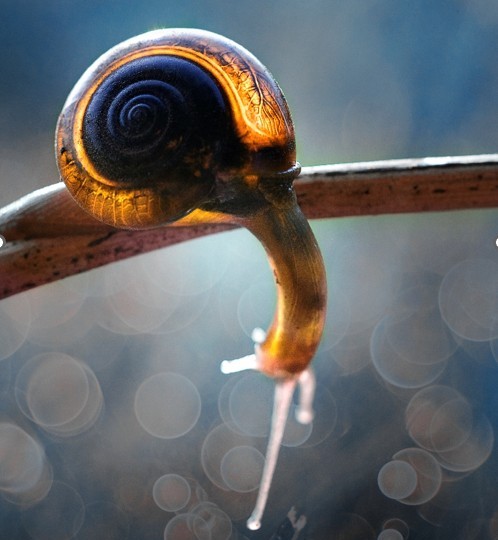
John Scrace came to Cleobury Gardeners in October to talk about combatting common garden pests and diseases. John is a plant pathologist who has years of experience answering RHS members’ questions about plant problems.
Honey Fungus – Top Disease Reported to the RHS
Honey fungus is a natural component of woodland ecosystems and rarely causes problems in the wild. The largest organism on Earth is a honey fungus: one specimen had an area of about 2 miles2, weighed 2-3 tonnes and was thought to be about 2,000 years old. Honey fungus possesses some bioluminescence which can be seen in woodlands, but not in the mushrooms.
Honey fungus is common in gardens built on old woodland, affecting woody plants including privet, viburnum, apple and cherry trees. Symptoms include yellowing leaves, progressive dieback and premature leaf fall. A common symptom in hedges is dieback in one area with yellowing leaves in adjacent areas. These symptoms are similar to water logging or drought, so to confirm the cause:
- Look under the bark at the base of the plant just above soil level. White fungus smelling of mushrooms should be visible below the bark if honey fungus is present.
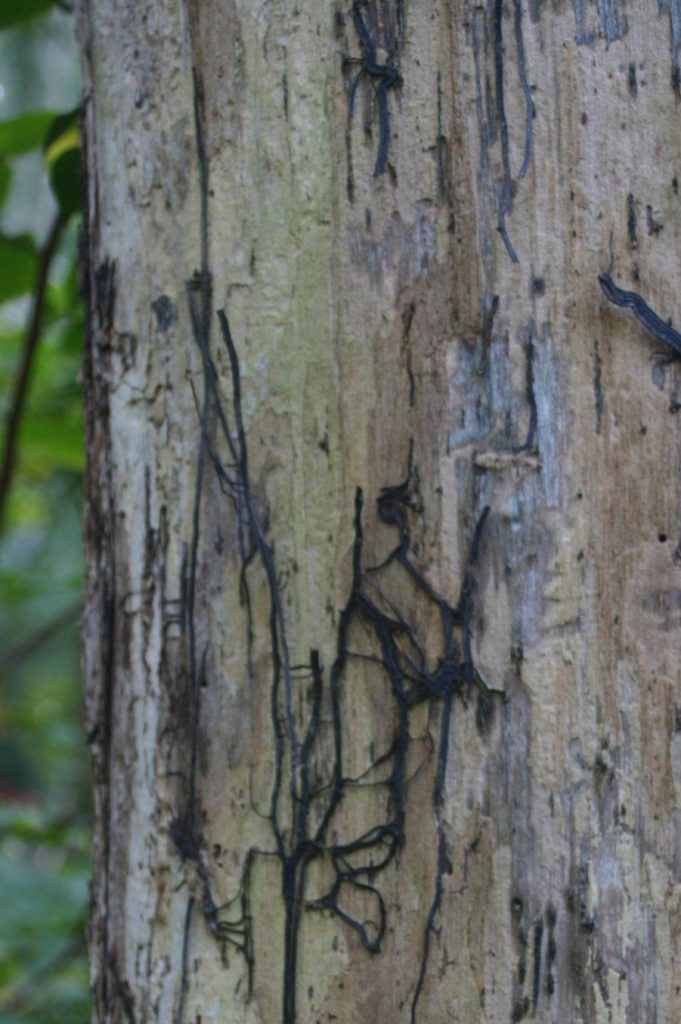
- Look at the plant roots up to 2 feet from the base of the plant. Rhizomorphs grow out from an infected root and are the means by which the fungus feeds and spreads. These rhizomorphs can be mistaken for plant roots: they are dark and thin and commonly referred to as “bootlaces”.
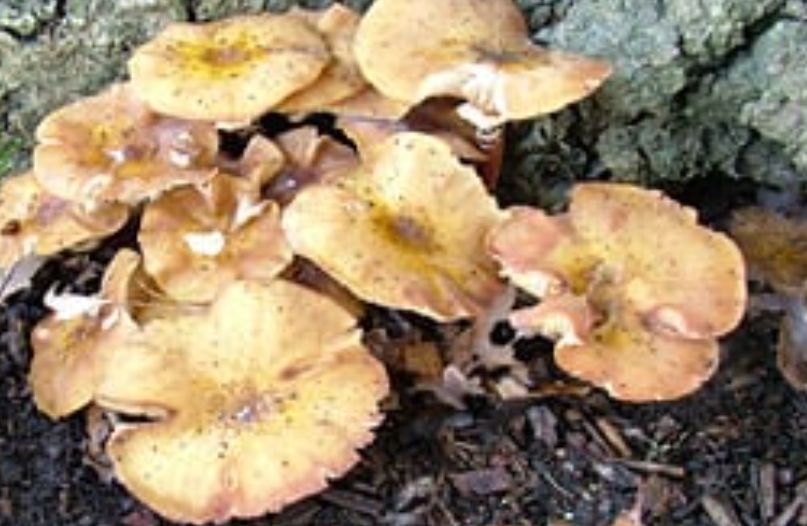
- Honey fungus may produce mushrooms in autumn around infected plants.
Control
Remove affected plants quickly and replace with less susceptible species, e.g., replace privet hedging with yew.
Slugs and Snails – Top Pest Reported to the RHS
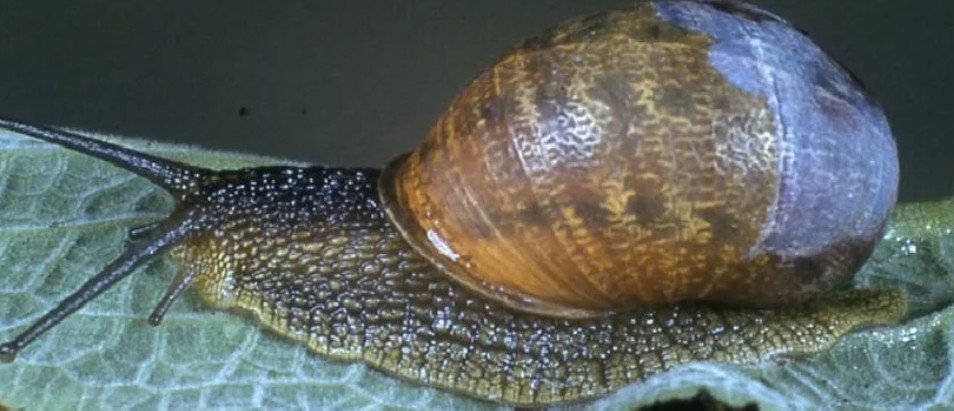
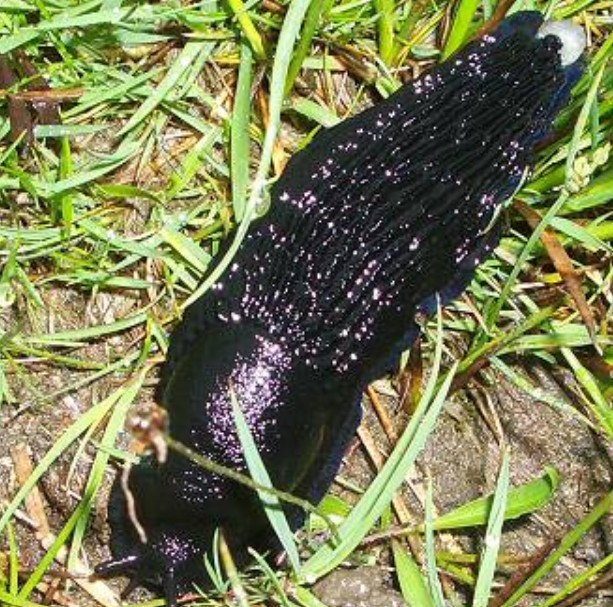
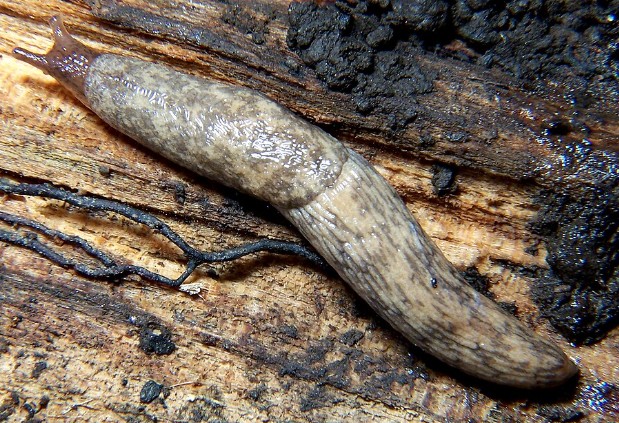
Slugs and snails take the number 1 spot for pests, although most UK species are beneficial for gardens, being a key part of the soil ecosystem by breaking down decaying matter. Those slugs and snails that eat live plants target soft green foliage like seedlings and specific plants like hostas.
The bad buys:
Control
Collect and destroy the culprits by:
- Hand-picking them during nighttime sorties.
- Collecting them in traps (beer traps).
- Put shelters around the garden and collect the slugs and snails before nightfall.
Attract slug and snail predators to your garden:
- A pond will attract frogs.
- Place large stones around that birds can use as anvils to crack open snail shells.
Use barriers around vulnerable plants:
- Sheep hair,
- Coffee grounds,
- Copper tape around pots,
- Mesh cloth covering pot drainage holes.
Chemical/biological controls:
- Ferric phosphate slug pellets are more environmentally friendly than previous pellets and generally safe to use. However, slug pellets are not recommended other than for very limited use because they reduce the food available to predators like frogs, birds and hedgehogs.
- Nemaslug parasitic worm lasts about 6 weeks.
Try to avoid harming beneficial slugs and snails, even if you have to accept some damage!
If all else fails, replace your vulnerable plants with ones that slugs and snails don’t like: generally those with hairy, tough or waxy leaves.
RHS Advice on Slugs and Snails
Wild About Gardens – Useful PDF on this site on Gardening with Slugs and Snails
Scarlet Lily Beetle
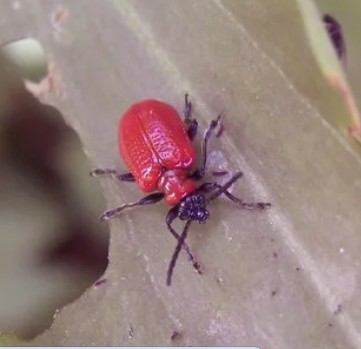
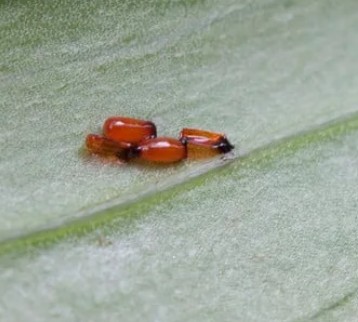
These beetles can defoliate lilies and fritillaries.They were first recorded in the UK in the 1940s but are now widespread throughout the UK. Adults overwinter in leaf litter and emerge to coincide with lily flowering. Reddish-orange eggs are laid on the underside of the leaves in groups and gradually darken in colour before hatching into larvae. It is the larvae that do most damage, particularly as they grow. The larvae look black but this is because they cover themselves in excrement and are very difficult to spot if they drop to the ground.
Control
Regularly check for the adults on leaves and eggs and larvae on the underside of leaves. Put something under the leaves to catch any larvae that try to fall to the ground.
Grazers G4 spray will deter the beetles and boost the plants defences but needs to be reapplied regularly and after rainfall.
Viburnam Beetle
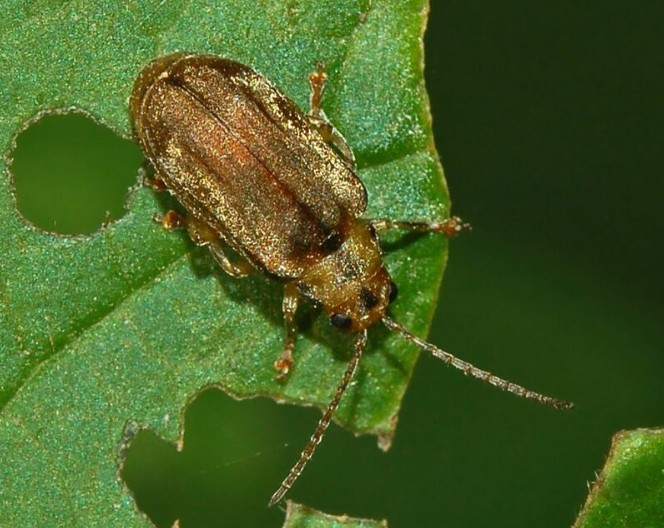
This beetle started being a significant pest about 20 years ago. Various viburnum species are affected including Viburnum tinus, Viburnum opulus (guelder rose), and Viburnum lantana. Affected shrubs can emit an unpleasant smell.
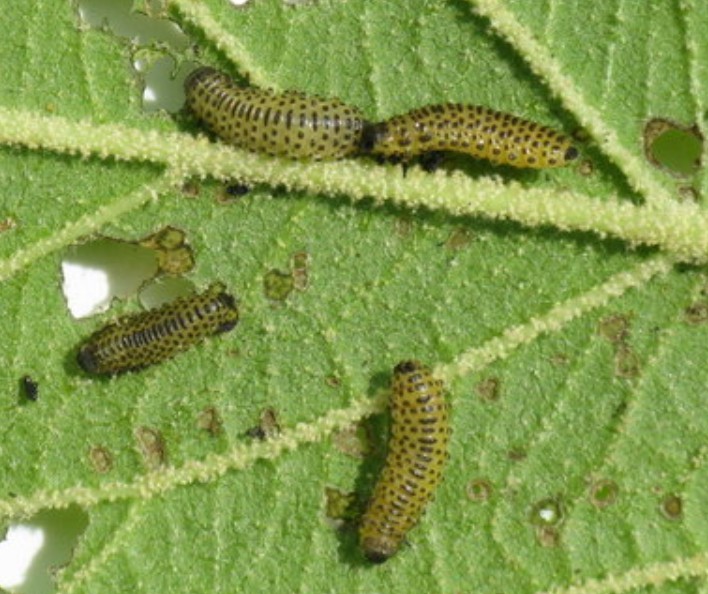
Larvae hatch in spring from eggs overwintered on the plant. They feed on the underside of leaves causing the most damage.
In early summer the larvae fall to the soil to pupate, emerging a few weeks later as adults that will feed again on the viburnum before laying their eggs.
Control
Most healthy plants will recover from some leaf loss and the beetle can be tolerated. Where this isn’t possible, the best approach is to check for the larvae in spring on the underside of leaves and hand pick them off.
Nemasys Fruit and Veg Protection can be sprayed on the underside of the leaves.
Blight – Potato and Tomato
Blight arrived in Europe in the 1840s. In Ireland it resulted in famine and death or emigration of about a quarter of the population. Blight is caused by an airborne fungus-like organism that germinates on plant leaves, particularly in warm and humid conditions, often in mid to late summer. The organism attacks plant tissue (leaves and stems) causing it to blacken and decay. A significant attack can kill plants in 2 – 3 weeks. Tomato stems and fruit are affected as the blight spreads through the plant. Potato tubers are affected if the spores are washed down into the ground. The tubers show reddish-brown decay of the flesh and can also be affected by secondary bacteria. A stored potato with blight will affect the whole store.
Control
There is no chemical treatment for infected plants so control relies largely on growing practice and use of blight-resistant varieties:
- Check plants regularly and remove any infected leaves immediately. This may not solve the problem if other leaves are aymptomatic but already infected; it may at least slow down progression of the disease.
- First early potatoes are rarely affected and even second earlies are unlikely to suffer significantly. Main crop potatoes are in the ground for longer and at the highest risk time for blight. Avoid growing main crop potatoes if blight is a problem in your area.
- Earth up potatoes well to make it harder for the spores to be washed down into the soil. This may give you enough time to harvest the tubers.
- Indoor tomatoes are less likely to be affected because it is harder for the spores to fall on damp leaves. Remove lower leaves from both indoor and outdoor tomatoes to avoid wetting the leaves during watering.
- There are blight resistant varieties for all types of tomatoes. Sarpo Mira is the best known blight-resistant main crop potato, although not to everyone’s taste.
James Hutton Institute Blight Spy
Vine Weevil
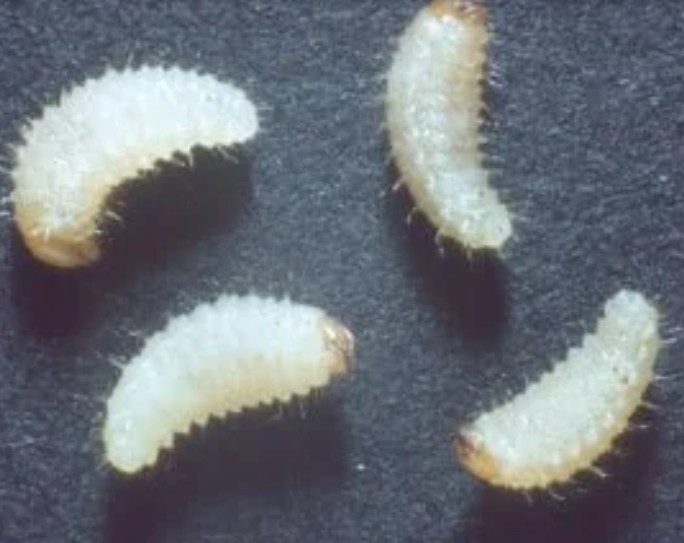
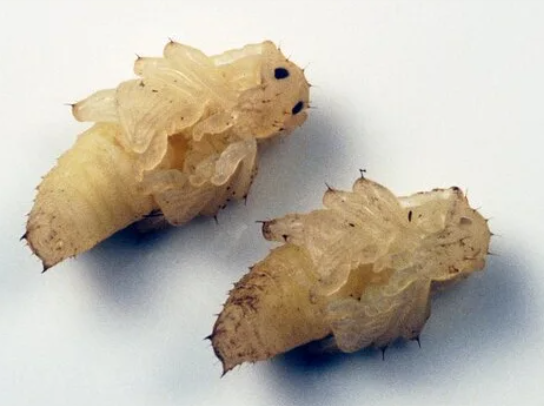
Vine weevils are brown/black speckled bugs about 1cm long. They are all female, don’t fly but are good climbers. They spend the day in leaf litter under their host plant and emerge at night to feed on the leaves. Vine weevils lay hundreds of eggs in the soil which hatch into larvae. The larvae overwinter in the soil before pupating in spring and finally emerging as adults.
Most plant damage is caused by the larvae and pupae that feed on plant roots. Plants in pots are particularly at risk of significant root damage that can weaken or kill the plants. They attack a wide variety of plants including primula, cyclamen, heuchera, strawberries, viburnum and hydrangea.

Control
Try to remove the adults:
- A container with straw placed under plants can encourage adults to nest there during the day and these can be collected and destroyed before nightfall.
- Night time sorties with a torch again!
Nematodes work well when watered into the soil of pots between August and September.
Repot plants and remove grubs from the soil.
Harlequin Ladybird
Harlequins originated in Asia and were found in the UK in 2004; they are now widespread across the country. They out-compete native ladybird species for food and will even eat native ladybird larvae and eggs and other insect larvae if there are no aphids to eat.
They are difficult to distinguish from native lady birds and can have a range of colours. Identifying features include:
- Harlequins are larger
- Harlequins have a white/cream head with an M or W pattern while natives have a black face/neck with 2 white spots.
- Harlequin larvae are spikier looking with distinct orange stripes down the side. Native ladybird larvae are smaller, smoother-looking and have discreet orange spots, not stripes.
- Harlequins tend to overwinter in large groups, sometimes indoors while native ladybirds are more likely to overwinter alone outside.
Control
There is no effective control.
Woodland Trust Ladybird Identification
Horse Chestnut Moth
The horse chestnut leaf mining moth was identified in the UK in 2002 and is now widespread. The moth lays its eggs on the leaves of the horse chestnut and the larvae enter the leaves and eat the internal tissues creating “mined” areas between the leaf surfaces. The leaves eventually turn brown and fall prematurely.
The premature leaf fall does not seem to affect the health of the tree: it produces leaves and flowers as normal at the start of each year, although conkers may be smaller.
Control
There is no very effective method of control. The pupae overwinter in the leaf mines so collecting the fallen leaves can reduce the problem for the following year but isn’t practical except for single isolated trees.
Horse Chestnut Bleeding Canker
This is caused by a bacterium that attacks the bark resulting in a thick brownish sticky liquid oozing from the stem or branch. The bark can crack and peel revealing orange/brown decay underneath. If the lesions girdle the trunk of the tree it is likely to die, although this can take many years. Branches can become brittle and fall creating a hazard.
Control
There is no method available to treat the cause of the disease. Management focuses on monitoring the health of the tree and reducing the risk from falling branches.