
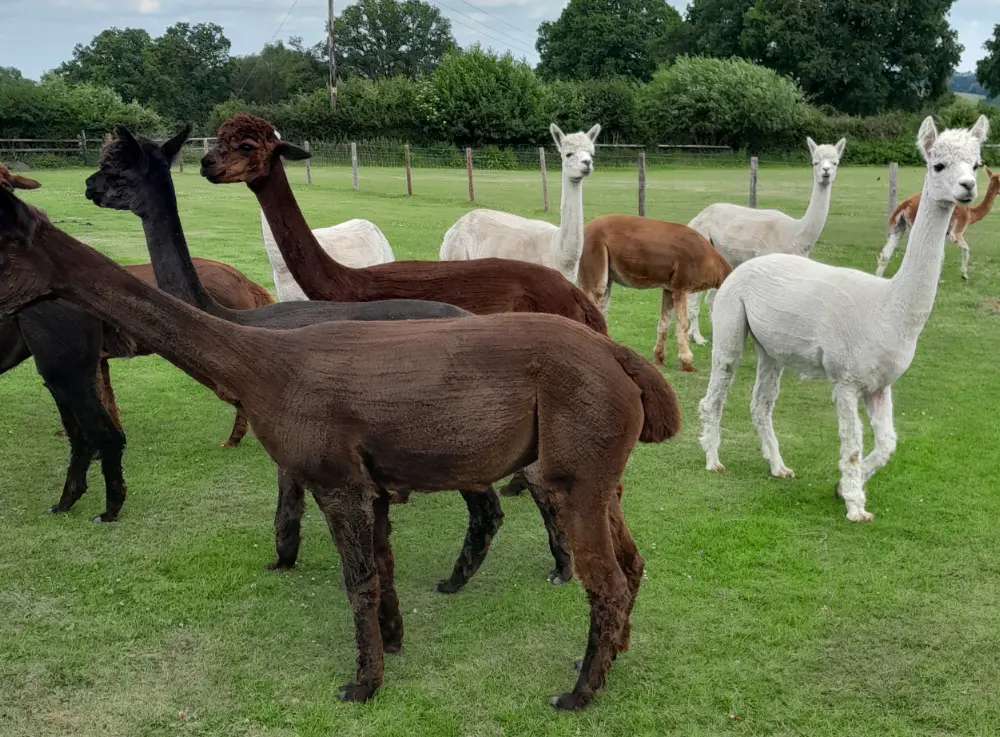
Lou Archer has been raising Alpacas near Farlow for many years (and collecting their famous “Lou’s poo”). Cleobury Gardeners visited Lou back in June: we loved the alpacas which we got to feed and hang out with!
Post Covid Lou also established a cut flower business supplying weddings, events and local markets.
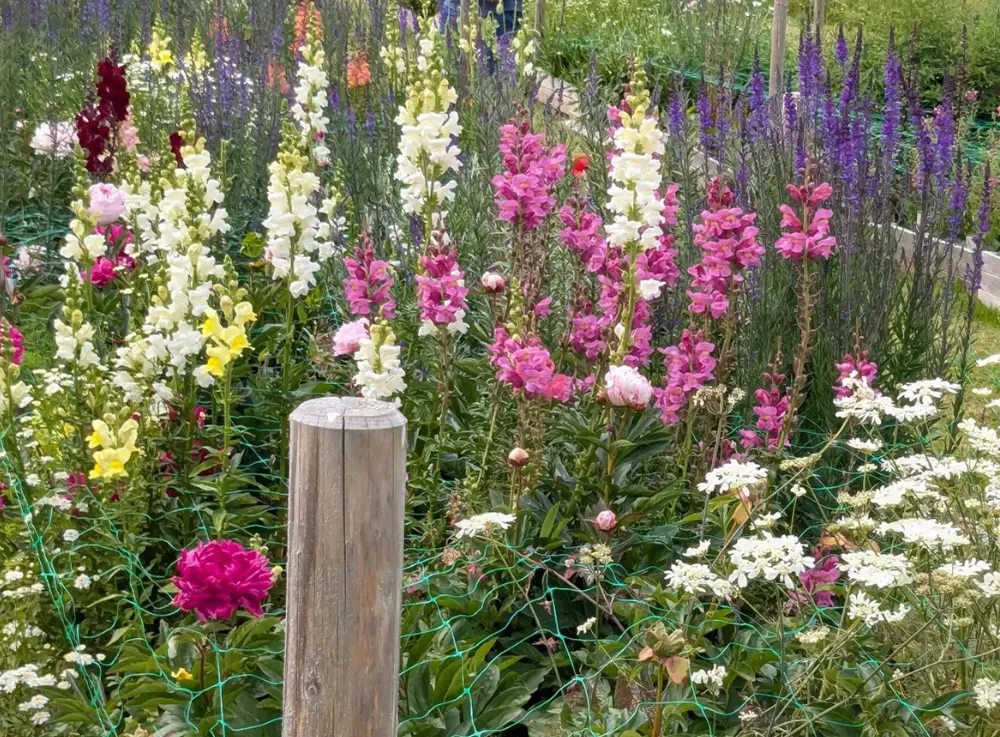
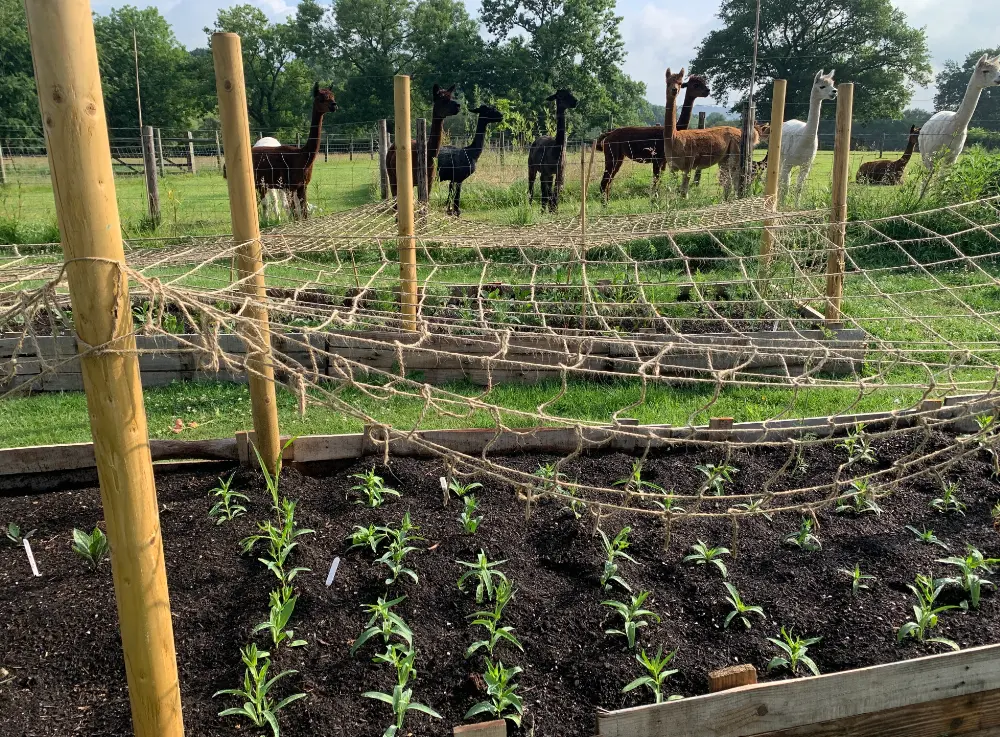
Lou created cut flower beds in a field and in a walled garden behind her house. In November Lou shared her experience of growing cool season hardy annuals with us. Many perennials can be grown in the same way.
Sowing hardy annuals in late summer / early autumn means you avoid the very busy period for gardeners from March through to June. It also replicates what these plants would do naturally.
Sowing and Planting Dates
You need to know your average hard frost dates (which is not as easy as it used to be!) to plan your seed sowing. For Cleobury, the dates are as follows:
- First hard frost: 17th – 21st November
Aim to plant your seedlings 6 – 8 weeks before the first hard frost – the soil should be warm enough for the seedlings to get established before harsher weather sets in:
- Autumn planting date – late September to early October
- Seed sowing date – late August to early September
Note that the seed sowing date will depend on how long your seeds typically take to germinate and grow – ideally the seedlings should be 3 – 5” tall when planted. Some seeds may have germination requirements (e.g., a spell in the fridge) that will force an earlier sowing. Make sure you check any other requirements (e.g., whether they need light to germinate).
If you miss the autumn sowing date, or if the variety is a bit less hardy, you can pot the seedlings up into a larger container and over-winter in a cold greenhouse or cold frame for planting in early spring. It’s a good idea to cover the soil where you will be planting the seedlings to warm it up a bit before planting. Aim to plant over-wintered seedlings about 6 weeks before the last hard frost date, which for Cleobury is as follows:
- Last hard frost – end March
- Spring planting date – mid February
Methods of Sowing
Lou uses Ladbrooke soil blockers to sow her seeds which avoids the need for pricking out and means twenty seedlings can be raised using a small amount of compost and space.
To use the soil blockers you will need to make up a soil mix that holds together when removed from the soil blocker. Make up a free-draining mix of compost, sand and perhaps some of Lou’s poo! The mix needs to be well sieved to remove any larger pieces. Add water to make a mud pie consistence that you can press the soil blocker into. Once the soil cells are pushed out of the soil blocker, sow a single seed into each cell. A toothpick makes a handy tool for creating a suitable hole for the seed.
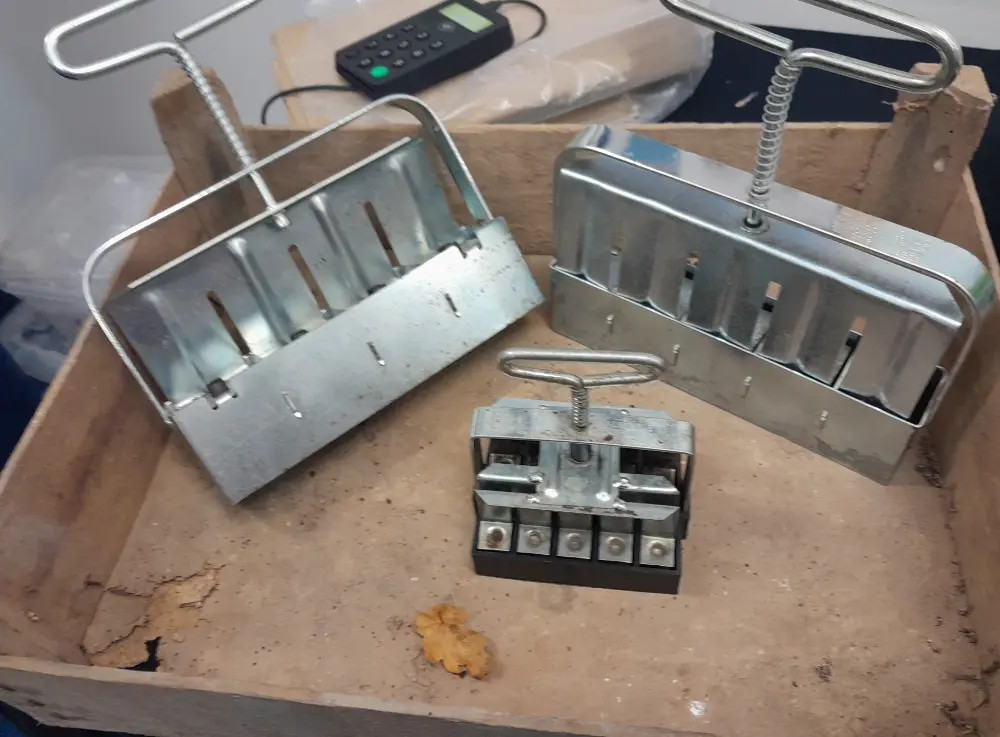
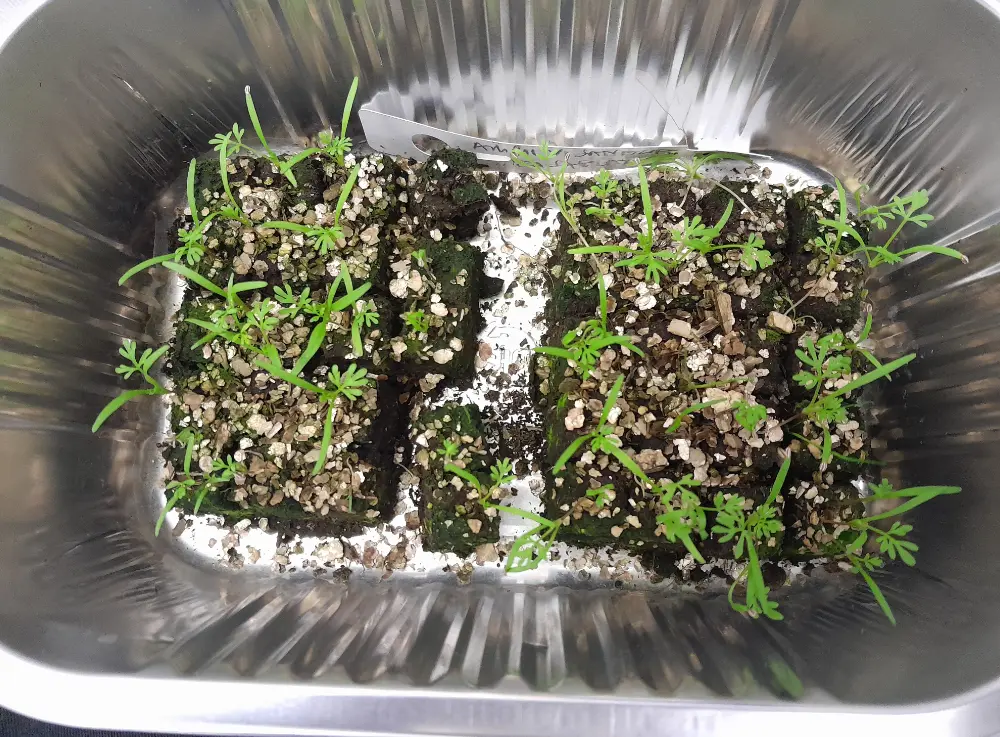
The picture below shows 2 lots of 20 seedlings that were sown using the smallest soil blocker and transferred to a recycled foil tray for growing on. Lou’s experience is that the smallest (20 cell) soil blocker is the most useful – you only need larger ones if you plan to over-winter seedlings or sow large seeds.
With tiny seeds where the germination rate is lower you might want to sow a couple of seeds into each cell. If the seed needs dark to germinate you can sieve some dry compost mix over the top. You can of course use ready-made plastic compost cells or cell inserts. Nurseries and garden centres are often happy to give these away and they can last many years if you’re careful (although not always easy to get the seedling out of the cell with the compost intact!). You can use ordinary wooden or plastic seed trays if you don’t mind pricking out.
With tiny seeds where the germination rate is lower you might want to sow a couple of seeds into each cell. If the seed needs dark to germinate you can sieve some dry compost mix over the top.
You can of course use ready-made plastic compost cells or cell inserts. Nurseries and garden centres are often happy to give these away and they can last many years if you’re careful (although not always easy to get the seedling out of the cell with the compost intact!). You can use ordinary wooden or plastic seed trays if you don’t mind pricking out.
Cool season hardy annuals are very hardy plants that will survive a British winter if they’ve had time to establish, so don’t over-protect them.
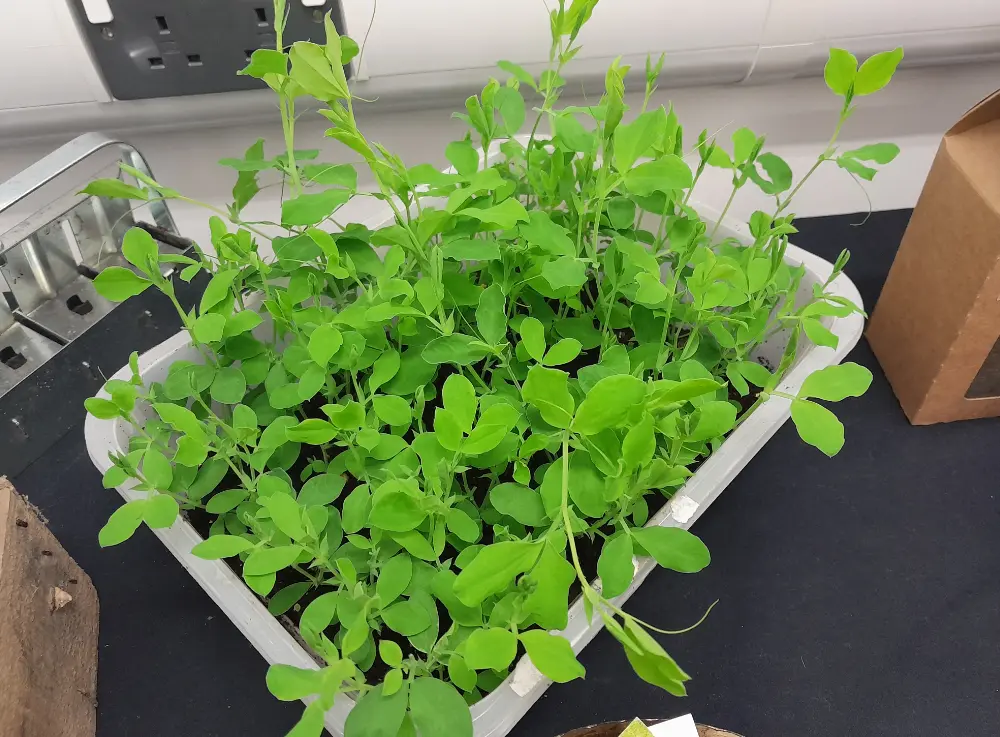
The picture right shows some sweet peas doing well, but they’ll need to be pruned to encourage side shoots before planting.
TIP: sweet pea prunings can be rooted in water to give you lots more plants!
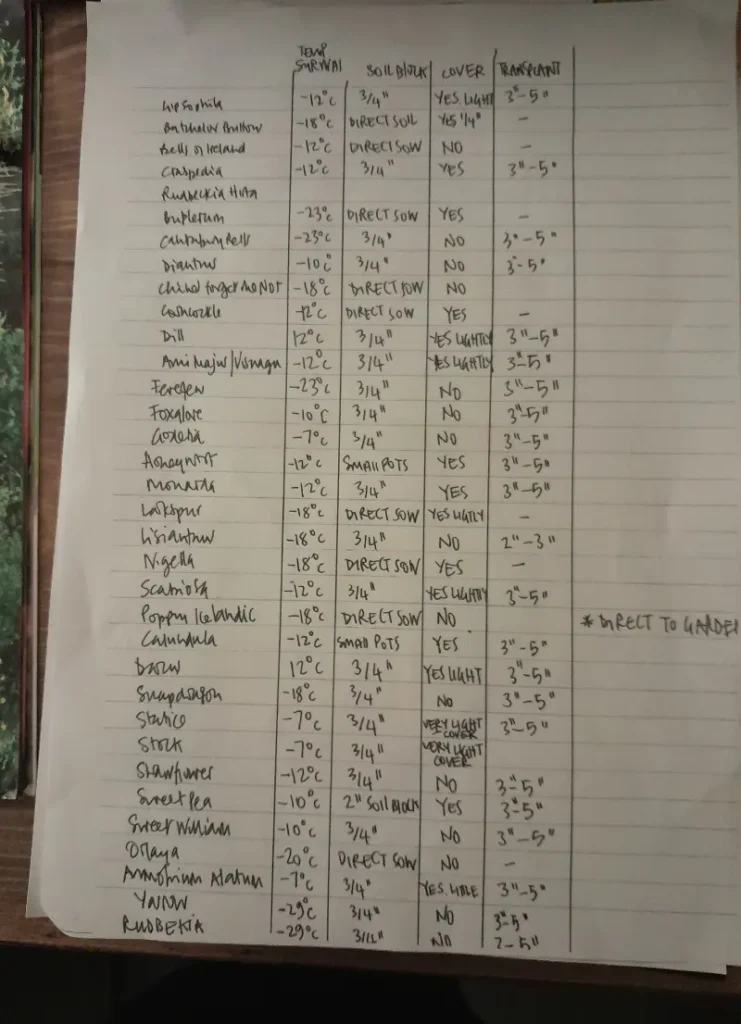
Varieties to try
Useful Links
The Archers at the Larches – Lou’s website also sells poo
Ladbrooke Soil Blockers – Includes online shop as well as recipes for sowing medium
Sarah Raven’s Top Hardy Annuals – useful for ideas even if you buy your seeds elsewhere