
Rachel Shrivens, Chair of Shropshire Organic Gardeners, gave us a great presentation in October on no-dig and organic gardening. Here is a summary of Rachel’s talk along with useful information from her handouts (see also useful links at the end).
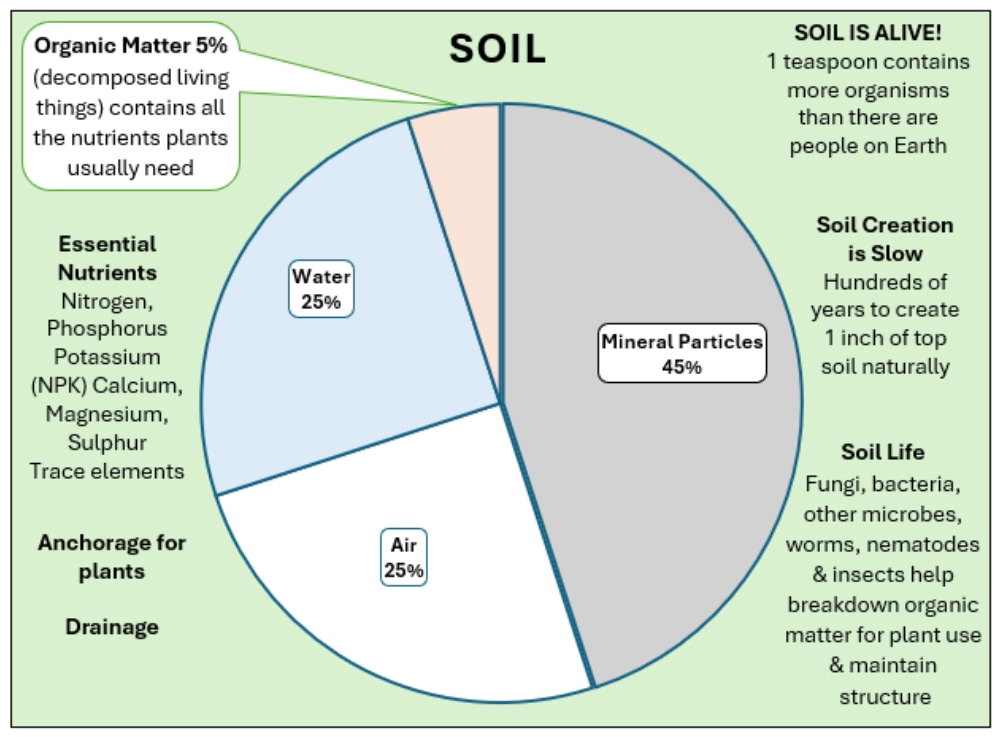
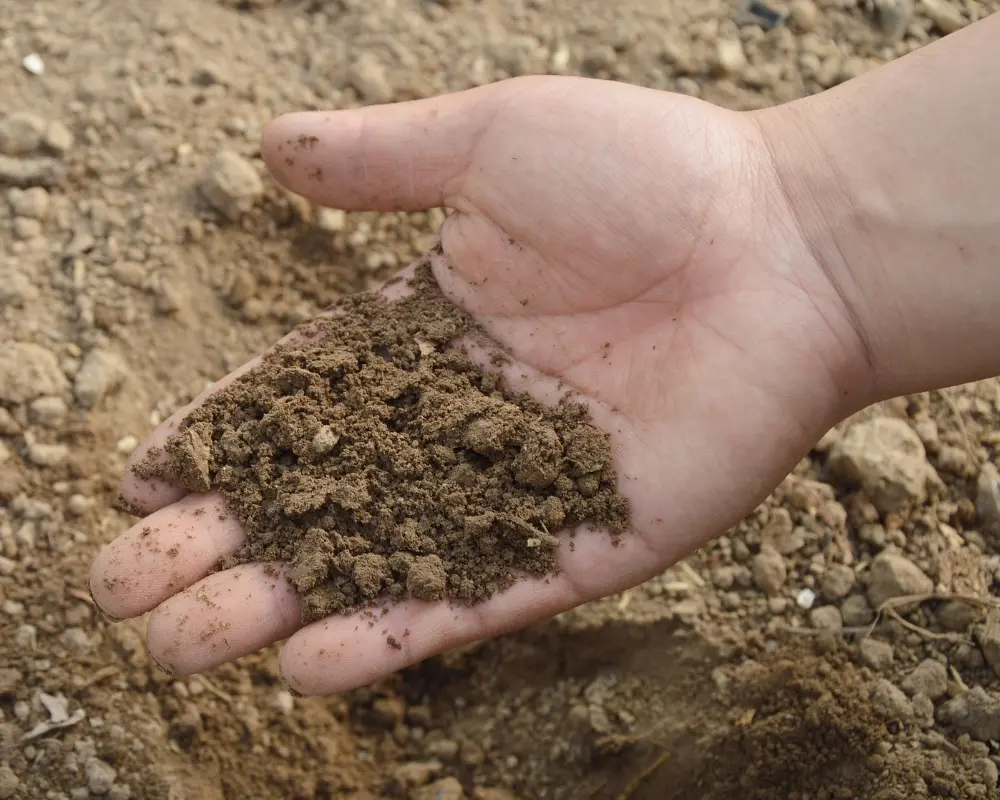
Added compost:
- Lightens heavy soils.
- Bulks up sandy soils and improves moisture retention.
- Feeds plants and soil organisms.
“Compost” means bulky organic matter (not the same as the compost you buy at the garden centre):
- Homemade garden compost is best and cheapest – see our March 2025 article on composting. It can be mixed with other bulky organic matter if needed.
- Local Authority compost from green waste.
- Worm compost.
- Leafmould.
- Well rotted animal / poultry manures.
No-Dig Gardening
Time to throw away the garden spade?
The no-dig method of gardening involves applying compost on top of the soil to improve its structure and fertility over time and without disturbing the existing soil structure. It contributes to one of the key principles of organic gardening: Building and Maintaining a Healthy Soil.
Benefits of No-Dig Gardening
- Similar yields with less time and effort and fewer back aches!
- Promotes a firm structure with fine pores that allow better movement of water, air and nutrients and better moisture retention. Digging may initially introduce large air spaces but can lead to compaction and poorer water retention over time.
- Preserves the soil organisms that help to feed plants and the mycorrhizae that promote root growth.
- Weed seeds stay buried, unlike digging where they are brought to the surface and can germinate.
What No-Dig Means in Practice
Apply a thick layer of compost (mulch) on the surface of the soil. This is generally done in early autumn, spring or summer. Mulching in winter with high nutrient composts is not recommended: it is wasteful of nutrients if plants aren’t growing. It can keep the soil too cold if you are planting in winter. Lower nutrient composts like Local Authority waste and Leafmould can be applied at any time.
A layer of homemade compost should be 3 to 6 inches deep (about 1 barrowload per 5 m2). This compost should provide most of the nutrients your plants need. Powdered materials such as lime, seaweed or bonemeal can be lightly hoed in if needed. Homemade compost can be supplemented from other sources (see above).
No-dig relies on worms to take the compost down into the lower layers of the soil – this will take longer than digging it in but will maintain a good soil structure and won’t disturb soil organisms.
Seed sowing can be done as normal – hoe and rake to create a firmly-surfaced seed bed.
Planting is done as normal, taking out a small hole through the mulch for the plants.
If you are applying compost to a border you may want to concentrate it around the planting, but otherwise it is spread evenly over the area.
Potatoes are grown slightly differently: plant on the surface of the compost and keep covering with a mulch as shoots emerge. Grass cuttings can be used to cover the mulch when it gets to about 6 inches.
Preparing a New Site
Remove as many perennial weeds as possible (yes you can dig them out at this stage!). Cover the ground with something to exclude light: cardboard is ideal and will rot down or use a woven fabric. Top this with a deep layer of compost, straw or grass (up to 10 inches). At least 1 growing season will be needed to kill any weeds (and maybe longer for persistent weeds).
You can grow larger, more vigorous vegetables through the mulch in the first year (e.g. cucurbits and brassicas) but look out for weeds emerging through the planting holes.
Winter Cover and Green Manures
It is important not to leave soil bare over winter: valuable nutrients can be leached out and cause pollution elsewhere. If there are areas without plant growth you can cover the soil with straw or cardboard or use green manures.
Green manures are grown to benefit the soil by preventing nutrients leaching out over winter and adding organic matter. They are normally dug in before planting but with the no-dig method they can be cut down with a hoe and left in situ or composted.
Different green manures do best at different times of year and early autumn planting is not always easy with crops still in the ground:
- Legumes take up nitrogen from the air depositing this in nodules on the roots. Nitrogen hungry plants like brassicas do well if they follow legumes grown the previous year.
- Rapidly growing winter greens will prevent nitrate leaching: grazing rye is one of the best (but not suitable with the no-dig method since it tends to re-grow after cutting). Winter Tares (vetch) and Field Beans can also be used, both are legumes.
- Clovers and buckwheat are both good for adding organic matter.
- Vetch, Rye, Alfalfa and Clovers are all good for weed suppression.
Organic Gardening
It’s not just about chemicals!
Key Principles:
- Build and Maintain a Healthy Soil
- Encourage Biodiversity
- Use Resources Responsibly
- Avoid Harmful Chemicals
- Maintain a Healthy Growing Area
NOTE: The principles support each other.
1. Building and Maintaining a Healthy Soil
Apply compost! Make sure any compost is well rotted to destroy disease pathogens and allow nutrients to stabilise.
Best practice is to minimise digging (e.g., use the no-dig method).
A healthy soil should provide all the nutrients your plants need but while you are getting there you can use organic fertilisers and liquid feeds:
- Home grown nettle or comfrey leaves can be added as a mulch.
- Wood ash from untreated wood an recycled through the compost heap.
- Homemade liquid feed made from comfrey or nettle leaves or from a wormery.
- For pot grown and greenhouse crops like tomatoes a liquid feed made from comfrey leaves can be used. Liquid seaweed, organic tomato feed and granular seaweed are also available.
2. Encouraging Biodiversity
Healthy soil will result in healthy plants that are more resilient against pest attacks. Another key defence against the pests is to encourage their predators into your garden or allotment. If you use harmful chemicals to kill the pests you may also be killing their predators.
The aim is to achieve a balance between predators and pests. The more different forms of life you can encourage, the better! They’re all wonderful to have in the garden as well.
Grow a variety of shrubs, plants and vegetables to provide something for wildlife throughout the year. Useful plants include: Poached egg plant, Corn marigold, Coriander left to flower, Phacelia, Borage, Parsley left to flower, Yarrow. See the RHS website for more information on predator-friendly planting.
Provide habitats for wildlife by leaving grassy refuges, log piles and leaf litter. Leaving stems and seed heads provides habitats and food for creatures over winter. Hawthorn, holly, ivy and other shrubs provide shelter. A garden pond will encourage frogs and toads as well as providing water for birds. Feed birds over winter (as long as you don’t have cats!).
3. Using Resources Responsibly
REDUCE – REUSE – RECYCLE
We want to reduce the amount of energy we use. Powered equipment is increasingly moving away from fossil fuels to greener sources of power (although it’s better and cheaper to use manual tools!). With respect to gardening, most energy is spent in the manufacture of new equipment. Buy the best tools and equipment you can afford, look after them and reuse them for as long as possible. Try also to use locally sourced materials to reduce the energy spent on transport.
Choose the wood you use for raised beds, supports, sheds and greenhouses carefully to ensure it is from managed woodland and has not been treated with harmful chemicals like creosote, copper, chrome or arsenic. Use prunings from your own garden as plant supports
Water butts can be bought relatively cheaply from recycled plastics. They may not be pretty but you can get creative with ways to conceal them! Rainwater is best for plants so try to capture and store as much as you can.
Plastic pots and trays can be reused for years and eventually recycled (although the older black pots may not be suitable currently for your local recycling plant). If you ever run out of your old plastic pots there are greener alternatives available now and you can make your own paper pots and wooden trays.
A general principle is to avoid using products that do not come from sustainable and managed sources (e.g., peat, tropical hard woods). This general principle includes by-products from processes that are not themselves organic (e.g., by-products from fish farms).
4. Avoid Using Harmful Chemicals
Pesticides and weedkillers can destroy other life forms, including the predators that should keep our pests under control. They can leave damaging residues in the soil and kill soil life.
There are kinder ways to manage weeds:
- Use mulches to suppress weeds including light-excluding cardboard or fabrics for weedy ground (don’t use carpet as this can contain toxic dyes). By-products of wool farming are good for suppressing weeds.
- Dig out perennial weeds before planting or creating your no-dig area.
- Use close planting, intercropping and undersowing, or grow ground cover plants / green manure to suppress weeds.
- Hoeing and hand weeding is effective if all else fails!
- Try to tolerate some “weeds” that may provide food for wildlife, especially during the leaner months.
Managing pests:
- Encourage their predators – see biodiversity. Healthy plants will be less susceptible to pests and should give you the time to wait for the predators to do their job. It’s been a bumper year for ladybirds!
- A bit more vigilance may be needed – check plants regularly and hand pick larger predators like slugs, snails and caterpillars.
- Use barriers to protect crops (e.g., cloches and mesh covers against cabbage white butterflies and carrot fly). A fine mesh in the bottom of hosta pots can prevent slugs entering through drainage holes. Collars around brassicas can prevent cabbage root fly.
- Dry and sharp materials can keep slugs away from tender plants. A combination of crushed baked egg shells, spent coffee grounds and wool pellets works well.
- Traps can be used: yellow sticky traps for greenhouses are effective (but can catch some harmless/beneficial insects), slug traps, grease bands for fruit trees.
- Black fly on broad beans can be reduced by removing the tender tops once the plant is tall enough.
- Cherry black fly does little to damage the tree and you can leave them for the ladybirds to find.
- Use water spray or garlic spray if needed to reduce a heavy infestation.
5. Maintaining a Healthy Growing Area
The aim is to keep soil and plants healthy.
Sensible things you can do include:
- Keep your soil healthy, encourage biodiversity and avoid harmful chemicals.
- Practice “right plant, right place”.
- Source healthy plants and try to chose ones with resistance to pests and diseases.
- Use crop rotation to reduce the build-up of diseases and optimise use of nutrients.
- Provide enough water and air to keep your plants healthy. Prune trees and shrubs to create space between branches. Keep greenhouses well ventilated. Water soil rather than plant foliage and don’t under or over water.
Good hygiene:
- Keep tools clean to prevent spreading disease. This will also help prolong their life.
- Check and clean pots and trays to remove over-wintering pests.
- Wash down greenhouses, polytunnels and cold frames annually to destroy over-wintering pests and diseases.
- Hot water or steam is best, but you can add natural cleaning products like vinegar or bicarbonate of soda.
Useful Links
Garden Organic – lots of useful free advice
Charles Dowding – Pioneer of No-Dig Gardening
Real Seed Company – Gardening Club favourite for veg seeds!
Get Composting – Garden Organic charity partner. Sometimes have council offers on products but none at the moment
Gardening Naturally – not everything they sell is suitable for organic gardening, but they stock a wide range of products that are.